

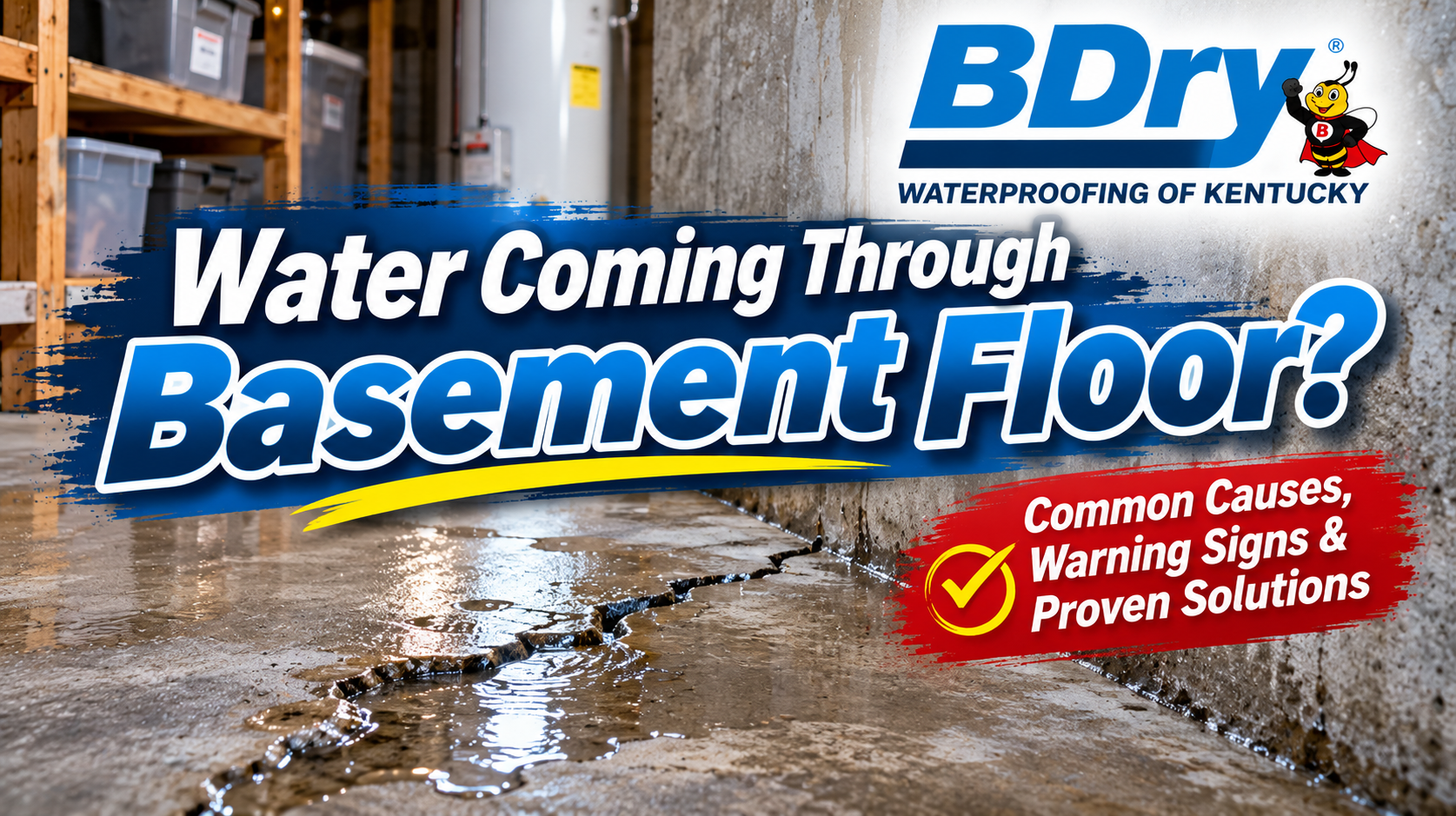
Discovering water coming through basement floor surfaces can be cause for concern, especially when there is no obvious plumbing leak, broken pipe, or water running down the walls. You might notice a small puddle forming in the middle of your basement, damp concrete after heavy rainfall, or water collecting along the edges where the floor meets the foundation walls.
Whatever the situation, water coming through basement floor is something you should never ignore.
For homeowners throughout Lexington, Winchester, and Central Kentucky, basement water intrusion can become a recurring problem during periods of heavy rainfall and saturated soil. When groundwater accumulates beneath a home’s foundation, it may find its way through cracks, joints, or other vulnerable openings in the concrete floor.
While mopping up the water may temporarily solve the visible problem, it does nothing to address the conditions allowing moisture to enter.
Fortunately, BDry of Kentucky has more than 60 years of waterproofing experience and provides professional solutions designed to manage groundwater intrusion and protect basements from recurring moisture problems.
In this guide, we’ll explain why you might discover water coming through basement floor, how to identify the source, what homeowners should do when they discover seepage, and how professional waterproofing systems help manage groundwater beneath the home.
Can Water Really Come Through a Concrete Basement Floor?
Yes. Although concrete is strong and durable, it is not completely waterproof.
Concrete contains microscopic pores, and basement floors can develop cracks or openings over time. Water can also enter through joints where different foundation components meet.
When groundwater accumulates beneath the concrete slab, pressure can encourage water to move through available openings.
The result may be a basement floor that appears wet even when the walls and ceiling seem completely dry.
Water may appear as isolated puddles, damp patches, or seepage along the basement perimeter.
According to Dalinghaus Construction, moisture can enter homes through basement floors as well as from other exterior and interior sources.
Understanding how water coming through basement floor services the first step toward finding an appropriate solution.
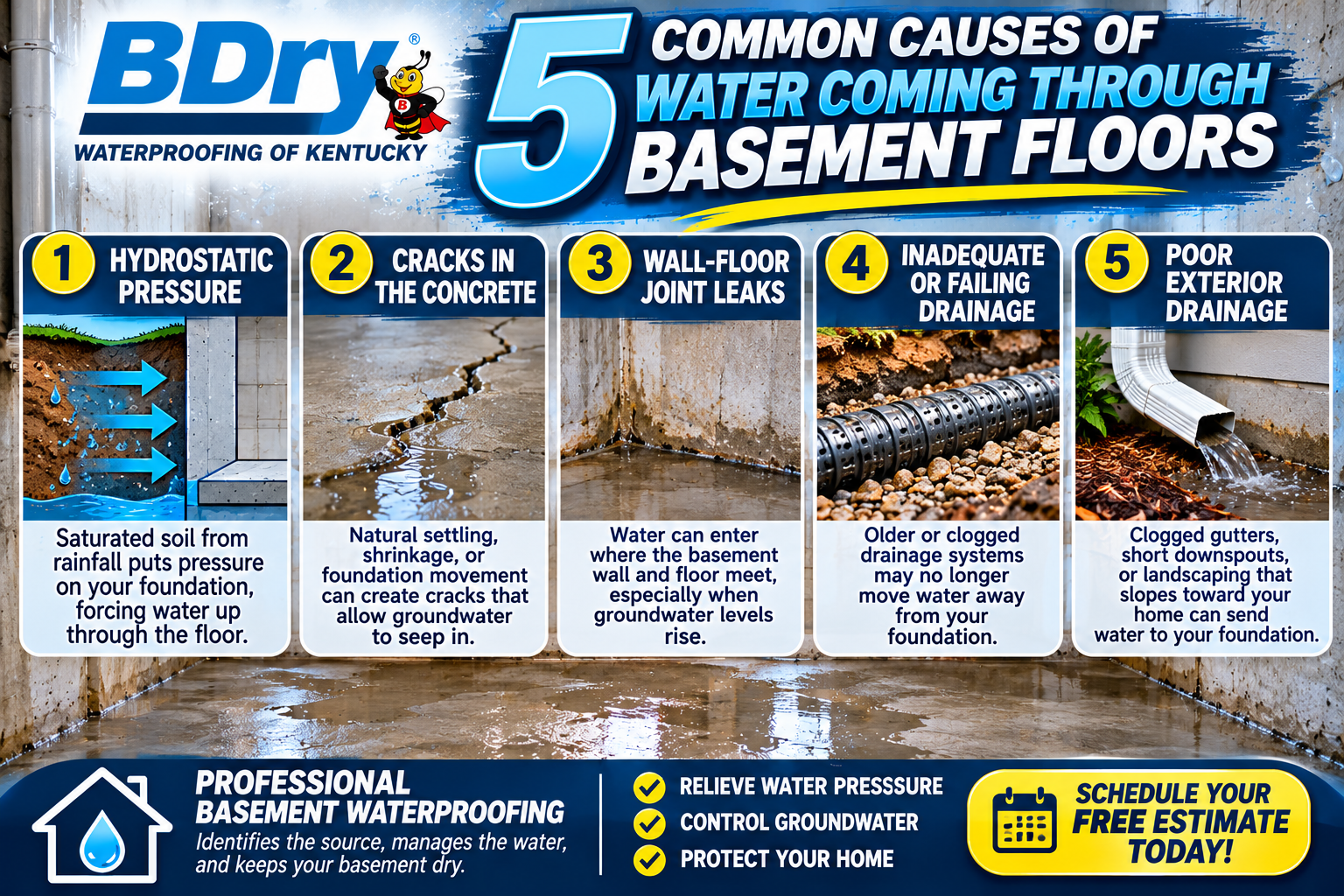
5 Common Causes of Water Coming Through Basement Floor
Several different conditions can allow moisture to appear on or through a basement floor.
The most effective solution depends on identifying which one is affecting your property.
1. Hydrostatic Pressure Beneath the Basement Floor
Hydrostatic pressure is one of the most important concepts to understand when dealing with water coming through basement floor.
During periods of heavy rainfall, water infiltrates the soil surrounding and beneath your home.
If the surrounding ground becomes saturated and drainage is inadequate, groundwater may accumulate around the foundation and beneath the basement slab.
This water exerts pressure against the below-ground surfaces of the home.
If cracks, joints, or other openings are present, water may move through them and appear on the basement floor.
Warning signs of groundwater pressure include:
-
Water appearing after prolonged or heavy rainfall.
-
Puddles developing near the basement perimeter.
-
Moisture entering through cracks in the concrete.
-
Water collecting along the wall-floor joint.
-
Several wet areas appearing at approximately the same time.
Groundwater pressure does not always produce dramatic flooding. Sometimes the first indication is a small, recurring damp spot.
However, even minor seepage deserves attention when it repeatedly returns.
2. Cracks in the Concrete Basement Slab
Concrete basement floors can develop cracks for several reasons, including shrinkage during curing, changes in ground conditions, and movement affecting the foundation.
Not every crack indicates a serious structural problem.
However, a crack may become a pathway for water when groundwater accumulates beneath the slab.
For example, a homeowner might notice that a narrow floor crack remains dry during normal weather but begins leaking after several days of rain.
This pattern suggests that groundwater conditions may be contributing to the problem.
Simply filling the crack with a store-bought sealant may not be enough if water pressure continues beneath the floor.
A professional inspection can help determine whether the crack is an isolated moisture entry point or part of a larger drainage problem.
Cracks accompanied by significant displacement, uneven flooring, or other signs of structural movement should also be evaluated by an appropriate structural specialist.
3. Water Entering at the Wall-Floor Joint
One of the most common places for basement water to appear is where the foundation wall meets the concrete floor.
This connection is often referred to as the wall-floor joint or cove joint.
Because the basement wall and floor are separate construction components, the joint can become a vulnerable area when groundwater accumulates around the foundation.
Water may travel around or beneath the foundation footing before appearing along the basement perimeter.
Homeowners sometimes mistake this for a leaking wall because the water collects directly beside it.
However, the actual source may be groundwater moving beneath the slab or around the footing.
This distinction matters because applying sealant to the visible joint does not necessarily control the groundwater responsible for the intrusion.
Professional drainage systems can be designed to collect water near these vulnerable foundation areas and direct it toward an appropriate discharge point.
4. Inadequate or Failing Foundation Drainage
Many homes have foundation drainage systems intended to move groundwater away from below-ground walls and footings.
However, older drainage systems may become clogged, damaged, or inadequate for the amount of water surrounding the property.
When drainage is insufficient, groundwater can accumulate and find pathways into the basement.
BDry explains that water may travel over or beneath foundation footings when an original builder-installed drainage system fails or becomes inadequate.
The company’s specialized waterproofing system is designed to collect groundwater at critical entry points and redirect it through a high-capacity drainage pipe.
Learn more about BDry’s basement waterproofing systems and services.
5. Poor Exterior Drainage and Saturated Soil
Sometimes the conditions causing basement floor seepage begin outside the house.
Clogged gutters, improperly positioned downspouts, and landscaping that slopes toward the foundation can direct excessive rainwater into the surrounding soil.
When water collects near the home instead of flowing away, it can contribute to groundwater accumulation beneath the basement.
Common exterior warning signs include overflowing gutters, puddles beside foundation walls, and downspouts discharging directly against the house.
Correcting these problems can reduce the amount of water reaching the foundation.
However, exterior drainage improvements alone may not resolve existing groundwater intrusion beneath the slab.
Some homes require a professionally designed basement drainage system as well.
Is It Groundwater, Condensation, or a Plumbing Leak?
Not all water coming through basement floor is caused by groundwater.
Before selecting a waterproofing solution, homeowners should consider whether the moisture could be coming from another source.
Groundwater Seepage
Groundwater seepage often appears during or after rainfall.
It may occur near floor cracks, around the basement perimeter, or in low areas of the concrete.
The problem may improve during extended dry weather and return when the soil becomes saturated again.
Condensation
During humid weather, moisture in the air can condense on a cool concrete basement floor.
This may create a damp surface without water actually entering from beneath the slab.
Condensation often appears as a widespread film of moisture rather than water emerging from a specific crack or joint.
A dehumidifier may help manage airborne moisture, but it will not stop groundwater seepage.
Plumbing Leaks
Water can also come from leaking supply lines, drain pipes, water heaters, washing machines, and other plumbing fixtures.
Unlike rain-related groundwater seepage, a plumbing leak may continue during dry weather.
If you suspect a plumbing problem, have it evaluated by a qualified plumber.
A Helpful Observation
Pay attention to when the water appears, where it collects, and whether the problem changes with rainfall or appliance use.
These details can help a waterproofing professional distinguish groundwater intrusion from other moisture sources.
However, visual clues alone cannot always establish the cause.
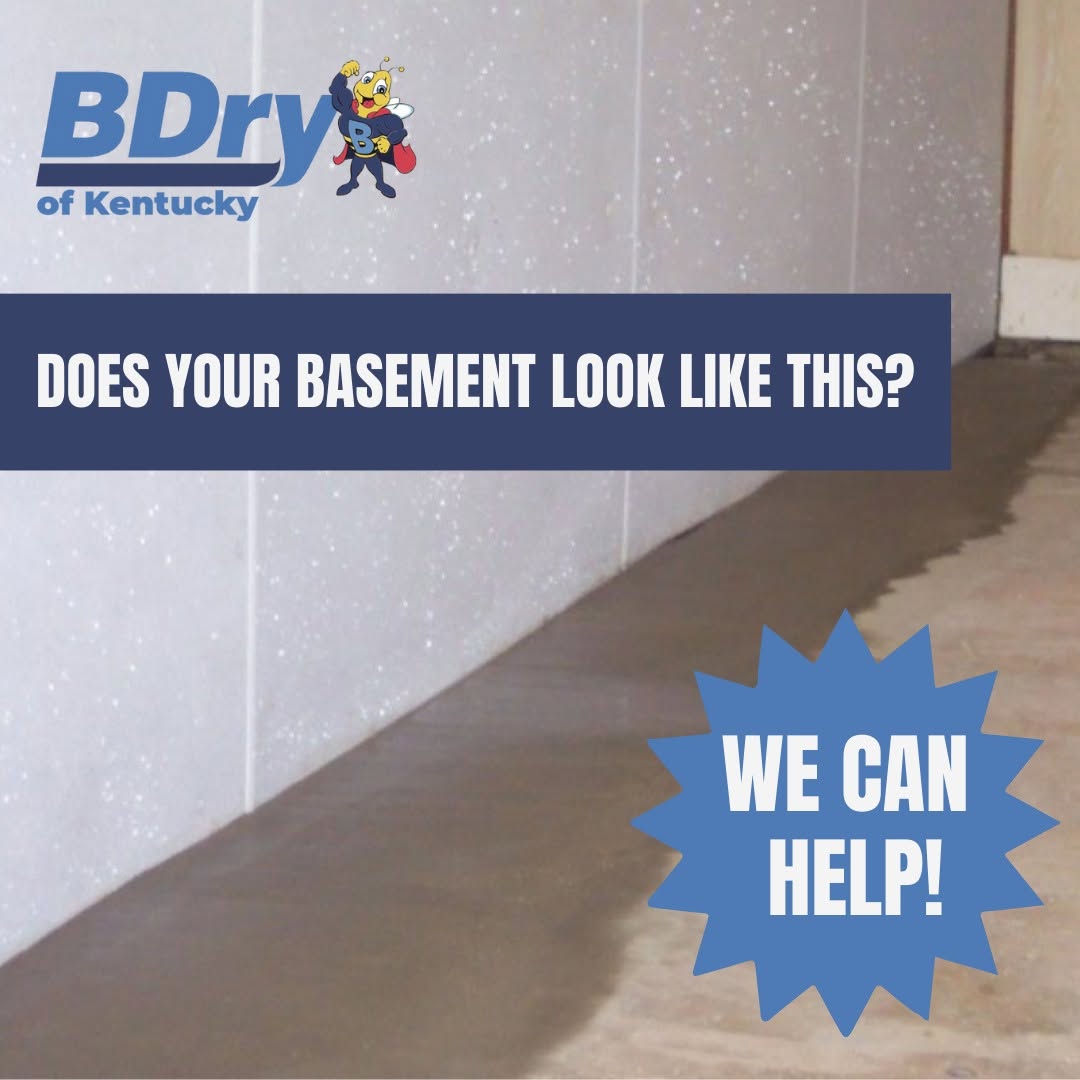
What Should You Do When You Notice Water Coming Through Basement Floor?
Finding water on your basement floor can be frustrating, but taking the right steps can help reduce additional damage.
Prioritize Electrical Safety
If standing water is near electrical outlets, appliances, extension cords, or the electrical panel, do not enter the water or touch electrical equipment.
Contact an appropriate professional before entering the affected area.
Protect Belongings When Safe
Move boxes, furniture, electronics, and other belongings away from the wet area if it is safe to do so.
Avoid storing valuable items directly on basement floors that have a history of water intrusion.
Document the Problem
Take photographs of wet areas, visible cracks, and water collecting near foundation walls.
Record whether the problem appears during heavy rainfall or continues during dry weather.
This information can be helpful during a professional inspection.
Check Exterior Drainage
When weather conditions are safe, examine your gutters, downspouts, and landscaping.
Look for obvious problems that may direct rainwater toward the foundation.
Avoid Covering the Problem
Do not install new flooring, carpeting, or finished basement materials over persistently damp concrete.
Covering moisture without correcting its source can create additional problems beneath finished surfaces.
Schedule a Professional Waterproofing Inspection
If the problem is recurring, a professional inspection can help identify how water is entering and what type of system may be appropriate.
BDry offers free basement waterproofing estimates for homeowners throughout its Kentucky service area.
You can contact BDry to request an inspection.
How BDry Helps With Water Coming Through Basement Floor
Professional basement waterproofing is not simply about sealing a wet spot.
The objective is to understand where groundwater accumulates, how it reaches the foundation, and how it can be collected and redirected.
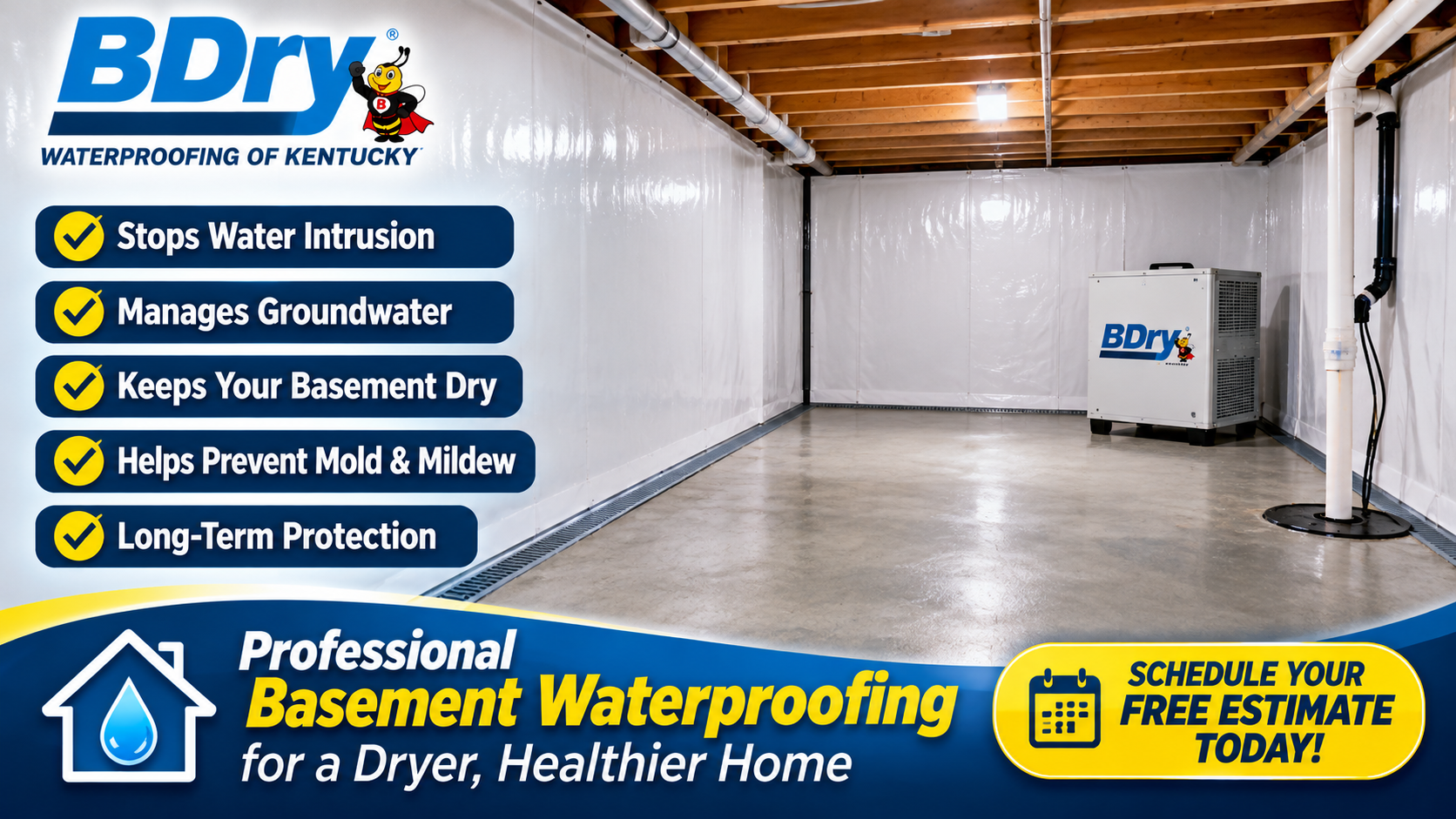
BDry uses specialized waterproofing systems designed to address several common groundwater entry points.
High-Capacity Drain System
BDry’s High-Capacity Drain System is engineered to collect groundwater moving around vulnerable foundation areas.
When water travels around or beneath the footing, the drainage system is designed to capture and direct it toward an appropriate outlet.
This approach addresses water movement rather than relying solely on surface coatings.
BDry Wall System
When moisture also enters through foundation walls, BDry’s wall system can guide water downward toward the drainage pipe.
This can be particularly important when a basement experiences both wall seepage and floor-level water intrusion.
Sump Pump Installation When Necessary
Some properties have suitable conditions for gravity drainage.
Others require a sump pump to collect water and actively discharge it away from the foundation.
BDry evaluates the property’s layout, terrain, and drainage requirements to determine whether a sump pump is appropriate.
Professional Moisture Control
If excessive humidity remains a concern after active water intrusion has been addressed, a commercial-grade dehumidifier may help manage moisture in the basement air.
BDry offers professional dehumidification solutions for damp basement and crawl space environments.
Every property is different, which is why BDry evaluates the conditions before recommending a customized waterproofing system.
Why Basement Floor Sealants May Not Solve Groundwater Problems
Homeowners sometimes attempt to stop basement floor seepage with waterproof paint, concrete patching products, or sealants.
These products can be useful for certain limited applications, but they are not a substitute for adequate groundwater management.
Imagine water accumulating beneath a concrete slab during every heavy rain.
Covering the visible crack may temporarily prevent water from appearing at that exact location, but it does not remove the water beneath the foundation.
Moisture may eventually find another pathway through the slab or wall-floor joint.
Similarly, installing a household dehumidifier may make the basement feel less humid without addressing water entering through the concrete.
Professional waterproofing focuses on the source and movement of water, not just the appearance of the floor.
For homeowners experiencing recurring seepage, a drainage-based solution may be more appropriate than repeated surface repairs.
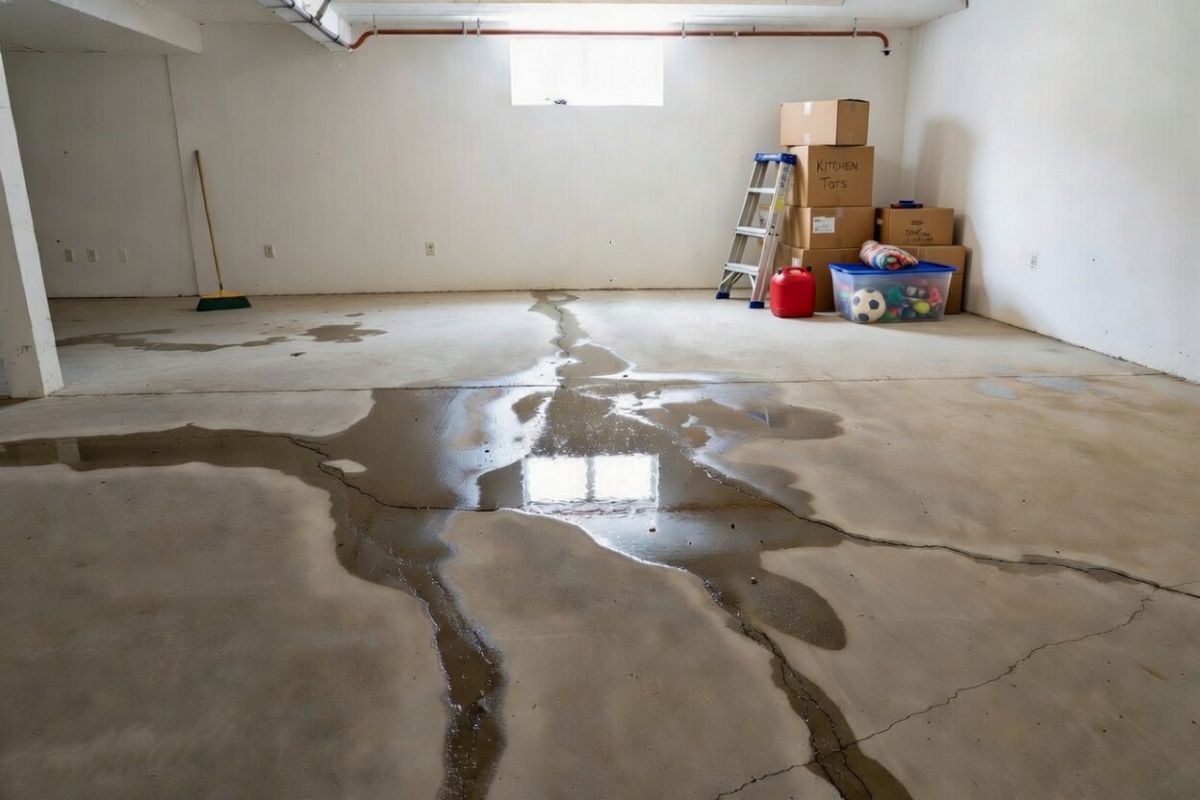
Can Water Coming Through a Basement Floor Cause Mold?
Yes. Persistent moisture can create conditions that encourage mold growth, particularly when water reaches organic materials.
Concrete itself is not an ideal food source for mold, but damp dust, cardboard, wood, drywall, carpeting, and other materials can support growth.
Water entering through a basement floor may also increase indoor humidity and leave stored belongings damp.
The EPA’s mold cleanup guidance emphasizes that controlling moisture and correcting water problems are essential to managing mold.
If mold has already developed, appropriate cleaning or remediation may be necessary in addition to waterproofing.
Preventing recurring moisture is an important part of keeping the problem from returning.
How Much Does It Cost to Stop Water Coming Through a Basement Floor?
There is no single price that applies to every basement floor waterproofing project.
The cost depends on the source of the water, the home’s construction, and the system required to manage the problem.
Factors that can influence pricing include the size of the basement, the length of drainage needed, accessibility, existing finished materials, the need for a sump pump, and the complexity of the groundwater problem.
A localized plumbing leak may require an entirely different repair than recurring groundwater intrusion around the foundation perimeter.
This is why homeowners should avoid assuming that every wet basement requires the same waterproofing system.
BDry offers free estimates so homeowners can learn more about their property’s conditions and available solutions before making a decision.
Financing options are also available for qualifying projects.
Why Choose BDry of Kentucky for Basement Floor Water Problems?
When water repeatedly appears through a basement floor, choosing an experienced waterproofing company matters.
BDry of Kentucky provides professional basement and crawl space waterproofing solutions throughout Central, Southern, and Eastern Kentucky.
More Than 60 Years of Waterproofing Experience
With a history dating back to 1958, BDry has decades of experience addressing residential groundwater intrusion.
Specialized Waterproofing Technology
BDry uses patented waterproofing products, including its High-Capacity Drain System and wall system, to manage common groundwater entry points.
Customized Solutions
The company evaluates each property’s conditions and recommends an appropriate waterproofing approach.
Trained, Licensed, and Insured Professionals
BDry emphasizes professional installation by trained, licensed, and insured personnel.
Strong Lifetime Warranty
BDry promotes a lifetime warranty for qualifying waterproofing installations, subject to the applicable terms and coverage.
Free Estimates and Financing
Homeowners can request a free waterproofing estimate, and financing is available for qualifying projects.
BDry specializes in waterproofing rather than structural foundation stabilization. Homeowners requiring structural foundation repair are directed to its affiliate, Ram Jack of Kentucky.
Frequently Asked Questions About Water Coming Through Basement Floor Surfaces
Why is water coming through basement floor after heavy rain?
Heavy rainfall can saturate soil around and beneath your foundation. If groundwater accumulates and drainage is inadequate, water may enter through floor cracks, joints, or other openings.
Can water come through a concrete basement floor without cracks?
Yes. Moisture can migrate through concrete pores, and water may also enter through construction joints or openings that are difficult to see.
Is water coming through basement floor a foundation problem?
It indicates a moisture problem, but it does not automatically mean your foundation has structural damage. Significant cracking, displacement, or movement should be evaluated separately.
Will waterproof paint stop water coming through a basement floor?
Waterproof coatings may help with certain surface moisture conditions, but they generally do not solve recurring groundwater pressure beneath a basement slab.
Do I need a sump pump if my basement floor leaks?
Not necessarily. Some homes can use gravity drainage, while others require a sump pump. A professional inspection can determine which approach is appropriate.
Can I finish my basement if water has been coming through the floor?
You should address recurring water intrusion and allow affected materials to dry before installing finished flooring, walls, or other moisture-sensitive materials.
Does BDry provide basement waterproofing in Lexington and Winchester?
Yes. BDry serves Fayette County, Clark County, and many other communities throughout Central, Southern, and Eastern Kentucky.
Stop Water Coming Through Basement Floor with BDry of Kentucky
Discovering water coming through basement floor surfaces is more than an inconvenience. It can be a warning sign that groundwater is accumulating around or beneath your foundation.
Whether water appears through concrete cracks, along the wall-floor joint, or in recurring puddles after heavy rainfall, identifying the source is essential.
Temporary cleanup and surface sealants may not address the conditions responsible for the intrusion.
Professional waterproofing helps homeowners understand how water is entering and determine whether drainage systems, sump pumps, or other moisture-control solutions are appropriate.
With more than 60 years of experience, specialized waterproofing technology, and customized solutions, BDry of Kentucky is ready to help homeowners throughout Lexington, Winchester, and surrounding Kentucky communities.
Don’t wait for another heavy rain to reveal the same basement water problem. Contact BDry today for a free waterproofing inspection and estimate.