
10 Signs of Water Damage in Basement | B-Dry Kentucky
Below you will find the 10 Signs of Water Damage in Basement Areas Kentucky Homeowners Should Never Ignore!
Your basement may be warning you about a water problem long before you see standing water. Learn what to look for and how to protect your Kentucky home.
Your basement is one of the most important parts of your home, yet it is also one of the easiest areas to overlook. Many homeowners rarely inspect their basement walls, floors, corners, or foundation until they discover a leak, musty smell, or visible water damage.
Unfortunately, moisture problems often begin long before a basement floods.
Recognizing the signs of water damage in basement areas can help Kentucky homeowners identify developing problems, protect their belongings, and prevent moisture from causing more extensive damage.
Whether you own a home in Lexington, Winchester, Richmond, Georgetown, or another Kentucky community, understanding how groundwater enters your basement is an important part of maintaining your property.
At B-Dry Kentucky, we understand how frustrating recurring basement moisture can be. Our experienced waterproofing professionals help homeowners identify sources of water intrusion and develop customized solutions designed to provide long-term protection.
Here are ten warning signs you should never ignore.
1. Persistent Musty or Damp Odors
One of the earliest signs of water damage in basement spaces is an unpleasant, musty smell.
Even when your basement appears dry, lingering odors may indicate hidden moisture behind finished walls, beneath flooring, or around foundation materials.
Musty odors can develop when moisture allows mold and mildew to grow on susceptible materials.
You may notice the smell becoming stronger after heavy rainfall, during humid summer weather, or when your heating and cooling system has been running less frequently.
What homeowners should look for:
- A stale or earthy smell that never completely disappears
- Odors becoming stronger after rainfall
- Musty smells coming from stored boxes or furniture
- Unpleasant odors near basement walls or corners
Do not assume that a musty basement is simply normal for an older Kentucky home.
Persistent odors deserve investigation, especially when accompanied by visible dampness or humidity problems.
2. Water Stains on Basement Walls
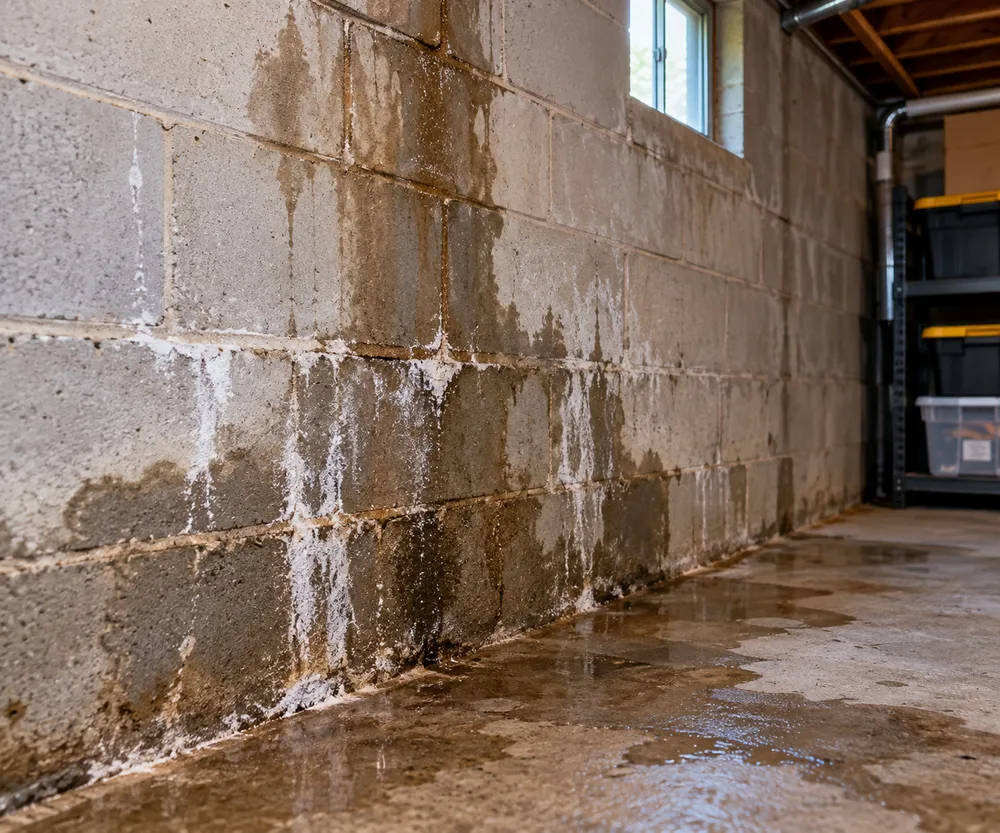
Water stains are another common warning sign of basement moisture intrusion.
Discoloration may appear as brown, yellow, or dark patches on concrete, masonry, drywall, or painted surfaces.
These stains can indicate that water has entered the basement previously, even when the affected surface currently feels dry.
Some stains develop near the floor, while others appear around cracks, window openings, or plumbing penetrations.
Water stains that return or expand after rainfall may suggest ongoing groundwater seepage.
Pay particular attention to:
- Discolored concrete block walls
- Stains near the wall-to-floor joint
- Dark areas beneath basement windows
- Water marks behind stored belongings
- Streaks extending downward from wall cracks
A professional waterproofing evaluation can help determine whether the moisture is entering through the foundation, originating from plumbing, or developing through condensation.
3. White Powdery Residue on Concrete or Block Walls
Have you noticed a white, chalky substance forming on your basement walls?
This material may be efflorescence, a mineral deposit left behind when moisture moves through masonry and evaporates.
As water travels through concrete, brick, or mortar, it can dissolve soluble salts. When the moisture reaches the surface and evaporates, those salts remain.
Although efflorescence itself is not mold, it can indicate that moisture has been moving through your foundation walls.
For Kentucky homeowners, recurring efflorescence is worth investigating, particularly when accompanied by other signs of water damage in basement areas.
Simply brushing away the residue may improve appearances, but it will not correct an ongoing water intrusion problem.
4. Peeling Paint, Bubbling Walls, or Damaged Drywall
Paint and finished wall materials can reveal hidden basement moisture.
When water enters through foundation walls or accumulates behind finished surfaces, it may cause paint to peel, bubble, blister, or separate from the wall.
Drywall can also soften, swell, stain, or deteriorate after repeated exposure to moisture.
These problems are especially concerning in finished basements where water intrusion may remain hidden behind decorative materials.
Common warning signs include:
- Paint bubbling or flaking away
- Damp or soft drywall
- Swollen baseboards
- Loose wall coverings
- Crumbling plaster
- Repeated staining after repainting
Repainting damaged surfaces without identifying the moisture source may temporarily hide the symptoms, but the underlying problem can continue.
If water is entering through the foundation, professional basement waterproofing services may be necessary to manage the intrusion.
5. Cracks in Basement Walls or Floors
Not every foundation crack indicates a serious structural problem. Concrete can develop small cracks due to shrinkage, temperature changes, or settling.
However, cracks deserve attention when they allow water into your basement.
Water may seep through vertical cracks, mortar joints, or the connection between basement walls and floors.
Some cracks become more noticeable during periods of heavy rainfall when groundwater levels rise.
Homeowners should be especially alert to cracks that:
- Leak during or after storms
- Continue growing
- Show displacement between surfaces
- Appear alongside bowing or shifting walls
- Develop repeatedly in the same area
Waterproofing and structural repair are not always the same service.
B-Dry Kentucky specializes in basement and crawlspace waterproofing. When a property requires structural foundation repair, homeowners can be referred to its affiliated foundation repair company, Ram Jack of Kentucky.
Learn more about identifying moisture-related cracks in our article about foundation crack repair.
6. Standing Water or Puddles After Heavy Rain
Standing water is one of the most obvious signs of water damage in basement areas, but homeowners should not wait until flooding occurs before seeking help.
Even small puddles can indicate that groundwater is entering through a foundation crack, floor joint, or another opening.
In some homes, water appears only during prolonged rainfall. In others, the basement may remain damp for several days after a storm.
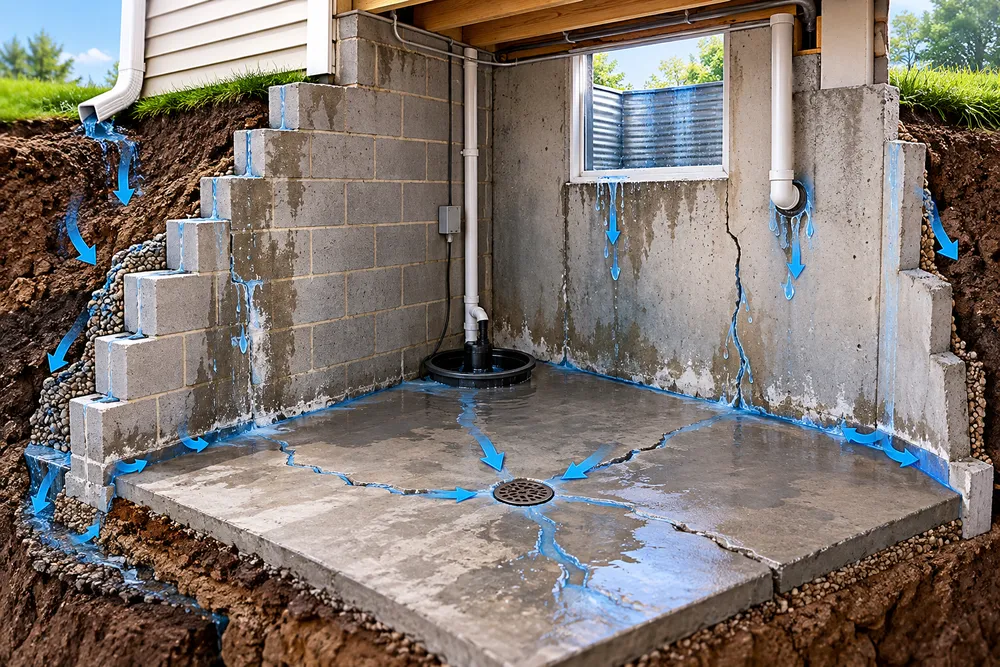
Water can enter through multiple pathways, including:
- Cracks in basement walls
- The joint between walls and floors
- Areas around foundation footings
- Basement window openings
- Poorly managed surface drainage
- Failed or inadequate drainage systems
Recurring water intrusion should not be dismissed simply because the water eventually disappears.
Repeated wetting can damage flooring, stored belongings, insulation, and other moisture-sensitive materials.
B-Dry Kentucky’s waterproofing systems are designed to collect and redirect groundwater through drainage components selected for the conditions affecting the home.
7. Mold or Mildew Growth
Visible mold is another warning sign that moisture may be accumulating in your basement.
Mold can appear on drywall, wood, cardboard, insulation, furniture, and other organic materials when moisture conditions support its growth.
It may appear as spots or patches of varying colors.
The U.S. Environmental Protection Agency explains that controlling moisture is essential to preventing mold growth.
According to EPA guidance, homeowners should address water leaks and maintain appropriate indoor humidity rather than relying on cleaning alone.
Mold exposure can affect individuals differently, particularly those with allergies, asthma, or certain respiratory sensitivities.
If you discover mold in your basement, identifying and correcting the moisture source should be a priority.
Professional mold remediation may also be necessary depending on the extent of contamination.
Important: Basement waterproofing helps address water intrusion, but it does not automatically remove existing mold contamination.
8. Damp Carpeting, Flooring, or Stored Belongings
Basement water problems are not always visible on the walls.
Sometimes, the first evidence appears beneath carpeting, around floor edges, or inside storage boxes.
Moisture can enter through basement floors or accumulate when humid air condenses on cooler surfaces.
You might notice:
- Carpeting that feels damp
- Flooring beginning to warp or buckle
- Musty cardboard boxes
- Rust developing on stored metal items
- Moisture beneath furniture
- Darkened areas along floor edges
Finished basements can be particularly vulnerable because flooring and wall coverings may conceal moisture until damage becomes more extensive.
If these conditions repeatedly occur, consider having your basement evaluated for both water intrusion and humidity-related problems.
9. Excessive Humidity and Condensation
Another frequently overlooked warning sign is consistently high humidity.
Kentucky summers can bring warm, humid conditions, and basements often remain cooler than the surrounding outdoor air.
When humid air contacts cool basement surfaces, condensation can develop.
You may see moisture collecting on pipes, windows, concrete walls, or other surfaces.
High humidity can also contribute to musty odors and mold growth.
The EPA’s moisture control guidance recommends keeping indoor relative humidity below 60%, ideally between 30% and 50% when practical.
A hygrometer can help homeowners monitor basement humidity.
However, a dehumidifier alone may not solve a problem caused by groundwater entering through the foundation.
B-Dry Kentucky offers moisture-control solutions, including professional-grade dehumidifiers, as part of its basement and crawlspace waterproofing services.
10. Water Appearing Where Basement Walls Meet the Floor
One of the most important signs of water damage in basement areas is moisture appearing along the joint where the foundation wall meets the basement floor.
This location is sometimes called the cove joint.
During periods of heavy rainfall or elevated groundwater, water pressure around the foundation can increase.
This pressure, known as hydrostatic pressure, can force groundwater toward openings and vulnerable areas of the foundation.
When an original drainage system becomes clogged, deteriorates, or cannot handle the volume of water, moisture may begin entering along the perimeter of the basement.
Homeowners may notice:
- A wet line along the basement floor perimeter
- Small puddles near exterior walls
- Moisture returning after heavy rain
- Water seeping from multiple locations
- Dampness concentrated in basement corners
These symptoms can indicate a drainage problem that requires more than a surface sealant.
Professional waterproofing systems can help collect and redirect groundwater before it spreads across the basement floor.
Why Kentucky Homes Experience Basement Water Problems
Understanding the signs of water damage in basement spaces is only part of protecting your property. Homeowners should also understand why moisture problems develop.
Kentucky homes can experience several conditions that contribute to basement water intrusion.
Heavy Rainfall and Saturated Soil
Extended periods of rain can saturate the soil surrounding a foundation.
When groundwater accumulates, pressure against basement walls and beneath floors may increase.
If drainage is inadequate, water can find its way through existing openings.
Soil Movement and Foundation Conditions
Soil composition varies across Kentucky.
Some soils expand and contract with changes in moisture, while other locations have drainage or settlement concerns.
These conditions can contribute to movement and cracking in certain foundations.
Aging Drainage Systems
Older homes may have original foundation drainage systems that no longer perform as intended.
Drainage pipes can become obstructed, damaged, or overwhelmed by water.
When groundwater is not managed effectively, basement seepage may become more frequent.
Poor Surface Drainage
Improper grading, clogged gutters, and downspouts discharging too close to the foundation can contribute to moisture problems.
Directing surface water away from the home is an important part of a comprehensive moisture management strategy.
High Humidity
Even without visible flooding, humid conditions can contribute to condensation and moisture accumulation.
A complete evaluation should distinguish between groundwater seepage, plumbing leaks, surface drainage problems, and humidity.
How B-Dry Kentucky Helps Protect Your Basement
If you recognize several signs of water damage in basement areas of your home, the next step is identifying where the moisture originates.
At B-Dry Kentucky, our waterproofing professionals evaluate the conditions affecting your basement and recommend solutions suited to your property.
Our services include:
Basement Waterproofing Systems
B-Dry’s patented waterproofing approach is designed to manage groundwater entering through common pathways around basement walls and foundation footings.
The system uses high-capacity drainage components and water-management methods to collect and direct water toward an appropriate discharge point.
Crawlspace Waterproofing
Water problems do not affect basements alone.
Damp crawlspaces can contribute to wood deterioration, musty odors, mold growth, and moisture problems beneath living areas.
Our waterproofing services include solutions for crawlspaces experiencing standing water and persistent dampness.
Basement Humidity Control
When humidity contributes to moisture problems, professional-grade dehumidification may help maintain more appropriate conditions.
Our team can evaluate whether humidity control should be part of the overall solution.
Customized Waterproofing Recommendations
Every home is different.
A basement experiencing water along the wall-to-floor joint may require a different approach than a basement with condensation or a localized leak.
B-Dry Kentucky focuses on identifying the problem before recommending an appropriate waterproofing solution.
Why Choose B-Dry Kentucky?
When you discover signs of water damage in basement areas, choosing an experienced waterproofing company matters.
B-Dry Kentucky provides homeowners with several important advantages.
More Than 60 Years of B-Dry Experience
The B-Dry brand has a history dating back to 1958, with waterproofing systems developed to address recurring basement water problems.
Patented Waterproofing Technology
B-Dry uses established waterproofing technology designed to manage groundwater intrusion through multiple common entry points.
Trained and Insured Professionals
Our team focuses on professional installation and recommendations tailored to the property’s conditions.
Lifetime Warranty Protection
B-Dry offers lifetime warranty protection on qualifying waterproofing systems. Homeowners should review the applicable warranty terms and coverage details.
Free Estimates
Homeowners can request a free waterproofing estimate to learn more about their options.
Financing Availability
Financing options are available. Contact our team to learn more about current terms and eligibility.
Frequently Asked Questions About Basement Water Damage
What are the first signs of water damage in a basement?
Early warning signs often include musty odors, damp walls, white mineral deposits, peeling paint, and excessive humidity. Water stains or moisture appearing after rainfall may also indicate groundwater intrusion.
Can a basement have water damage without flooding?
Yes. A basement can experience moisture damage without ever having visible standing water. Condensation, seepage, and hidden leaks can damage building materials over time.
Does a musty basement always mean there is mold?
Not necessarily. Musty odors may indicate moisture or microbial growth, but the source should be investigated rather than assumed. Persistent odors accompanied by dampness deserve attention.
Will waterproof paint stop basement leaks?
Waterproof coatings may help with certain surface moisture conditions, but they generally do not correct significant groundwater pressure or failed drainage systems. The appropriate solution depends on the source of the leak.
Should I waterproof my basement before finishing it?
Yes, identifying and correcting existing moisture problems before installing drywall, flooring, or insulation can help prevent concealed damage later.
When should I call a basement waterproofing professional?
Consider a professional evaluation when leaks recur, water collects after rainfall, walls remain damp, or moisture problems continue despite basic drainage and humidity-control efforts.

Protect Your Kentucky Home Before Water Damage Gets Worse
Recognizing the signs of water damage in basement areas is one of the most important steps you can take toward protecting your home.
Musty odors, peeling paint, damp flooring, wall stains, foundation cracks, and standing water may seem minor at first. However, recurring moisture can damage belongings, affect indoor air quality, and lead to more extensive repairs when left unaddressed.
The earlier you identify the source of water intrusion, the sooner you can take appropriate action.
At B-Dry Kentucky, we help homeowners throughout Central, Eastern, and Southern Kentucky address basement and crawlspace moisture with proven waterproofing solutions.
Whether you live in Lexington, Winchester, Richmond, Georgetown, Nicholasville, or a surrounding community, our team is ready to help you understand your waterproofing options.
Schedule Your Free Basement Waterproofing Estimate Today
Do not wait for a small moisture problem to become a major basement leak.
Contact B-Dry Kentucky to learn how our professional waterproofing solutions can help protect your home.
B-Dry Kentucky
325 Tierney Way
Winchester, KY 40391
Call: (859) 744-7500
Request Your Free Waterproofing Estimate
B-Dry Kentucky — Helping Kentucky Homeowners Keep Their Basements and Crawlspaces Dry.
