

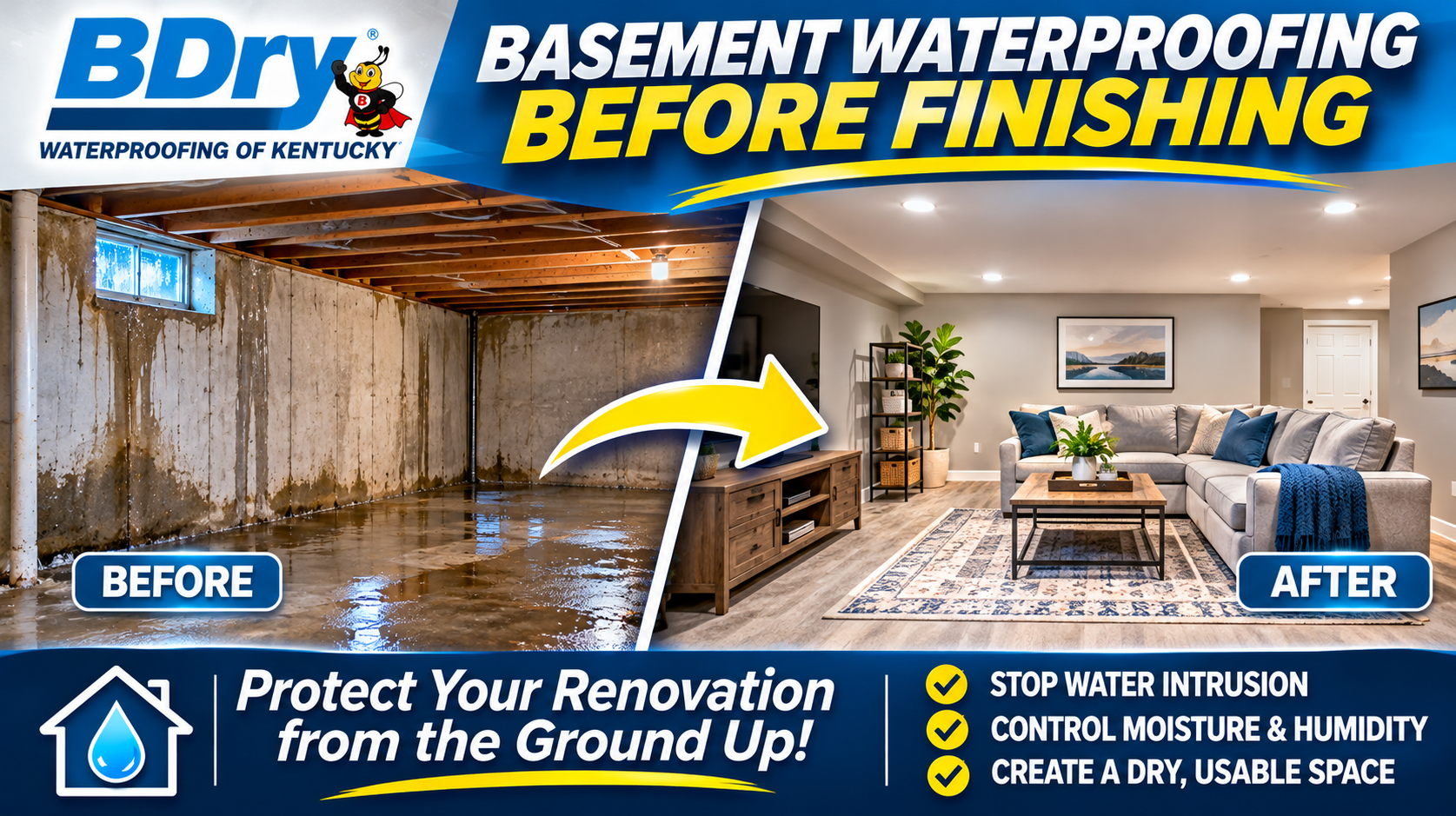
Planning a basement renovation in Kentucky? Learn why basement waterproofing before remodeling protects your investment, prevents moisture problems, and helps create a more comfortable living space.
Finishing your basement is an exciting home improvement project. Whether you’re dreaming of a family entertainment room, home office, guest bedroom, workout space, or comfortable gathering area, transforming an unfinished basement can give your home valuable additional living space.
However, before choosing flooring, painting walls, or purchasing furniture, there’s one important step that homeowners should never overlook: basement waterproofing before remodeling.
A beautifully remodeled basement can quickly become a costly disappointment if groundwater begins seeping through foundation walls or collecting beneath newly installed flooring.
Unfortunately, many homeowners discover moisture problems only after completing their renovations. By that point, water may have already damaged drywall, insulation, carpeting, furniture, and other materials.
For homeowners throughout Lexington, Winchester, Richmond, Mount Sterling, and surrounding Central Kentucky communities, professional basement waterproofing is an important part of preparing a below-ground space for renovation.
With more than 60 years of waterproofing experience, BDry of Kentucky helps homeowners address groundwater intrusion and moisture problems before they interfere with their home improvement plans.
Let’s explore why waterproofing should come before finishing your basement, the warning signs to watch for, and how professional solutions can help protect your investment.
Why Basement Waterproofing Before Remodeling Is So Important
A basement renovation involves more than improving the appearance of an unfinished space.
Once drywall, insulation, flooring, and furniture are installed, the basement becomes a significant investment in your home.
Unfortunately, finishing materials can conceal existing water intrusion problems.
A foundation wall that previously showed visible dampness may become hidden behind drywall. Small puddles along the basement perimeter may no longer be noticeable beneath carpet or finished flooring.
If the underlying moisture problem hasn’t been corrected, water can continue entering the basement without being immediately visible.
Over time, this may lead to damaged materials, musty odors, mold growth, and expensive repairs.
The Environmental Protection Agency (EPA) recommends inspecting basements for leaks and moisture problems before converting them into living spaces.
The agency also advises correcting existing moisture problems before beginning renovation work.
For Kentucky homeowners, basement waterproofing before remodeling provides an opportunity to address potential water intrusion while foundation walls and floors remain accessible.
7 Reasons to Waterproof Your Basement Before Remodeling
1. Protect Your Investment in New Flooring
New flooring is often one of the most expensive components of a basement renovation.
Homeowners may choose luxury vinyl plank, tile, engineered flooring, or carpeting to create a comfortable, finished appearance.
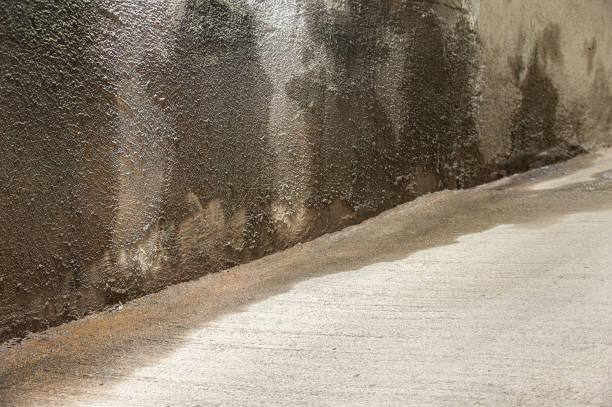
However, moisture entering through a basement floor can damage certain flooring materials and their underlying components.
Even flooring marketed as water-resistant may not prevent problems caused by persistent groundwater beneath the surface.
Moisture can also affect adhesives, underlayment, and other installation materials.
Before installing new flooring, homeowners should determine whether the concrete slab experiences recurring dampness or groundwater seepage.
Professional basement waterproofing before remodeling can help address water intrusion before flooring installation begins.
2. Prevent Moisture Damage Behind Drywall
Drywall gives finished basements the appearance of traditional living spaces.
Unfortunately, it can also conceal moisture problems.
When groundwater enters through foundation walls, moisture may collect behind finished surfaces.
Over time, damp conditions can damage drywall, insulation, wooden framing, and other materials.
Because these areas are hidden, homeowners may not notice the problem until staining, odors, or visible deterioration appear.
Addressing foundation seepage before installing finished walls makes it easier to identify water entry points and implement an appropriate solution.
3. Reduce Conditions That Encourage Mold Growth
Mold thrives in damp environments.
Basements can be particularly vulnerable because they are surrounded by soil, often have cooler surfaces, and may experience limited airflow.
When moisture enters through foundation walls or floors, it can create favorable conditions for mold growth on drywall, wood, carpeting, and other materials.
According to the EPA’s guide to mold and moisture, controlling moisture is the most important step in preventing mold problems.
The EPA also recommends keeping indoor humidity below 60%, ideally between 30% and 50%.
Professional basement waterproofing before remodeling helps address unwanted groundwater intrusion, while appropriate humidity control can reduce condensation and dampness.
Existing mold may require separate cleaning or professional remediation.
4. Protect Furniture and Personal Belongings
A finished basement often becomes a place for expensive furniture, electronics, decorations, and personal belongings.
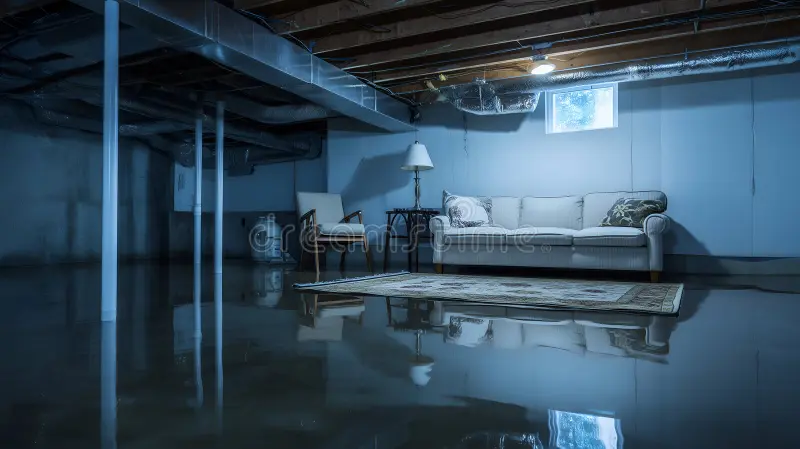
Imagine completing a basement entertainment room, purchasing a new sectional sofa, and installing a large television—only to discover standing water after the next heavy rain.
Even relatively small amounts of recurring water can damage furniture, rugs, stored belongings, and certain electronic equipment.
Waterproofing before finishing helps reduce the risk of groundwater intrusion affecting these investments.
5. Avoid Expensive Renovation Rework
One of the biggest advantages of waterproofing before remodeling is avoiding unnecessary demolition.
If water begins entering after a basement has been finished, contractors may need to remove portions of flooring, drywall, or other materials to access affected foundation areas.
This can add labor, material replacement, and restoration expenses to the waterproofing project.
When the basement is still unfinished, foundation walls and floor edges are generally easier to inspect and access.
Addressing water intrusion before construction begins can make the waterproofing process more straightforward and help reduce the possibility of having to redo completed renovation work.
6. Create a More Comfortable Living Environment
A finished basement should feel like a comfortable extension of your home.
However, persistent moisture can contribute to musty odors, damp surfaces, and uncomfortable humidity levels.
These conditions can make a newly remodeled space less enjoyable.
Proper waterproofing, drainage, insulation, ventilation, and humidity management all contribute to a more comfortable basement environment.
The EPA’s indoor moisture guidance emphasizes controlling water sources and indoor humidity to reduce dampness.
7. Help Preserve the Long-Term Condition of Your Home
A basement renovation should be an improvement that homeowners can enjoy for years.
Persistent water intrusion, however, can affect building materials and create recurring maintenance problems.
Professional waterproofing helps manage unwanted groundwater and reduces prolonged moisture exposure in the basement.
It is an important step toward protecting both the renovated space and the materials surrounding it.
Signs You Need Basement Waterproofing Before Remodeling
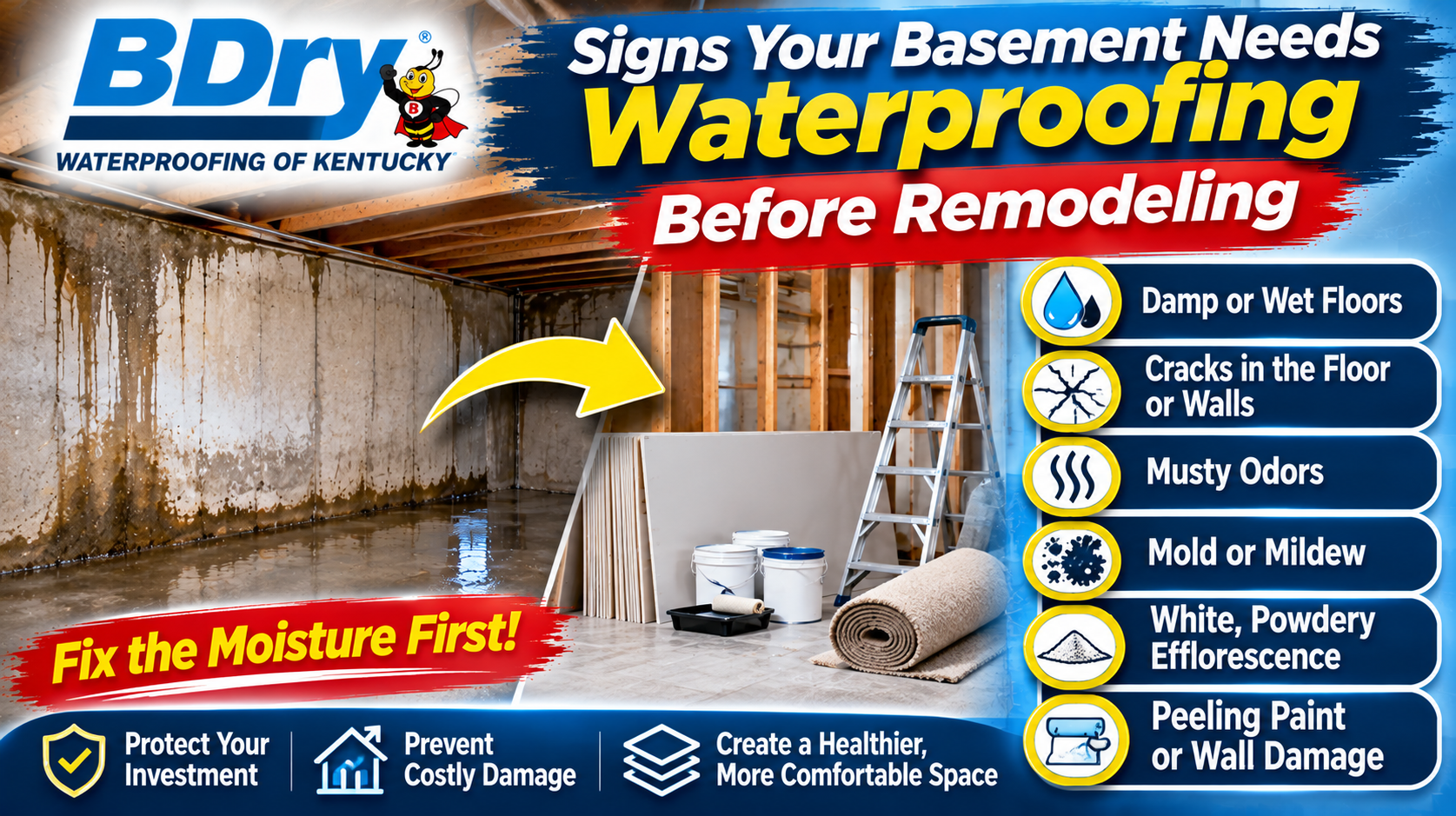
Even if your basement has never experienced significant flooding, it may still have moisture problems.
Before starting renovations, inspect the basement for warning signs.
Water Stains on Foundation Walls
Discoloration or staining may indicate that water has previously entered through the foundation.
Pay particular attention to stains near floor level or around visible cracks.
White Powder on Concrete or Masonry
White mineral deposits, called efflorescence, can develop when moisture moves through concrete or masonry and leaves salts behind.
Efflorescence may indicate that moisture is traveling through the foundation material.
Musty Odors
A persistent musty smell may be associated with damp building materials, elevated humidity, or hidden moisture.
Investigating the source before finishing the basement is important.
Cracks in Foundation Walls or Floors
Not every foundation crack indicates a serious problem, but cracks can provide pathways for groundwater.
Cracks accompanied by significant movement, displacement, or bowing should be evaluated by an appropriate structural specialist.
Dampness After Heavy Rain
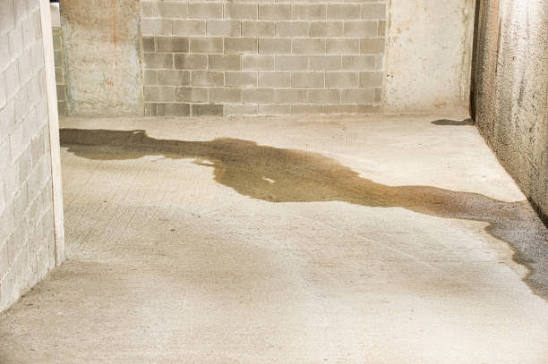
If your basement floor becomes wet after rainfall, groundwater may be entering through floor cracks, wall-floor joints, or other openings.
Even if the moisture disappears after several days, recurring seepage deserves attention.
Peeling Paint or Bubbling Wall Coatings
Paint that peels or bubbles on basement walls may indicate moisture beneath the surface.
Applying another coat of paint does not necessarily address the underlying water problem.
If you notice these warning signs, consider scheduling a professional inspection before proceeding with your renovation.
Why Kentucky Basements Experience Water Problems
Kentucky homeowners face a variety of environmental conditions that can contribute to basement moisture.
Rainfall, groundwater movement, soil drainage characteristics, and foundation construction all influence how water behaves around a home.
Groundwater and Hydrostatic Pressure
When rainwater infiltrates the soil surrounding a foundation, groundwater can accumulate against basement walls and beneath the floor.
This water creates pressure against below-ground surfaces.
If openings exist, water may enter through cracks, mortar joints, or other vulnerable areas.
Poor Exterior Drainage
Clogged gutters, short downspouts, and landscaping that slopes toward the foundation can direct rainwater toward the home.
This increases the amount of water accumulating in the surrounding soil.
Aging Foundation Drainage Systems
Some older homes have drainage systems that are no longer functioning effectively.
When drainage becomes inadequate, groundwater may accumulate around the foundation and eventually enter the basement.
Foundation Wall and Floor Openings
Water can also travel through cracks, wall-floor joints, and areas around foundation footings.
The location where water becomes visible is not always the location where it first entered the foundation.
This is why identifying the source of intrusion is essential.
How BDry Helps Prepare Your Basement for Renovation
Professional basement waterproofing before remodeling begins with understanding how water enters the property.
At BDry of Kentucky, waterproofing solutions are customized to the home’s foundation and drainage conditions.
Professional Basement Evaluation
BDry assesses the individual water intrusion problem to determine which waterproofing measures may be appropriate.
This can include evaluating visible seepage, foundation conditions, and potential groundwater entry points.
High-Capacity Drain System
BDry’s specialized High-Capacity Drain System is designed to collect groundwater moving around vulnerable foundation areas.
Water entering near foundation footings can be directed into the drainage system rather than spreading across the basement floor.
BDry Wall System
When water enters through foundation walls, BDry’s wall system helps direct moisture toward the drainage system.
This approach manages groundwater rather than relying entirely on surface coatings.
Sump Pump Solutions
Some homes require a sump pump to remove collected water.
Where gravity drainage is not practical, a sump pump can move water through a discharge line to an appropriate location away from the foundation.
Moisture and Humidity Control
Even after active groundwater intrusion is addressed, some basements may require additional humidity management.
BDry offers commercial-grade dehumidification solutions for damp basement and crawl space environments.
Learn more about BDry’s basement waterproofing services.
Should You Waterproof a Basement That Has Never Flooded?
Not every basement requires the same waterproofing system, and a basement with no history of water intrusion may not need extensive drainage installation.
However, homeowners should still evaluate moisture conditions before finishing the space.
Consider whether the basement has experienced dampness, musty odors, condensation, efflorescence, or water stains.
Also review exterior drainage and whether the foundation has a history of leaks.
A professional inspection can help determine whether active waterproofing measures are necessary.
The objective is to make an informed decision before installing materials that could conceal future moisture problems.
When Should Basement Waterproofing Before Remodeling Happen?
The ideal time to evaluate basement waterproofing before remodeling is during the earliest planning stages.
A practical renovation sequence includes:
-
Inspect the basement. Identify visible water intrusion, dampness, and potential moisture sources.
-
Correct plumbing and exterior drainage problems. Repair leaks, maintain gutters, and address drainage issues as appropriate.
-
Install necessary waterproofing systems. Complete recommended groundwater drainage and moisture-control work.
-
Confirm that moisture problems have been addressed. Allow affected materials to dry and evaluate remaining humidity concerns.
-
Plan insulation and finishing materials. Choose materials and assemblies appropriate for below-grade environments.
-
Complete the renovation. Install framing, electrical components, insulation, walls, and flooring according to applicable codes and professional guidance.
If the basement will become occupied living space, homeowners should also consider building permits, emergency escape requirements, ventilation, and radon testing.
The EPA recommends radon testing in connection with basement conversions and remodeling.
Waterproofing is an important part of preparation, but it does not replace other building safety requirements.
How Much Does Basement Waterproofing Before Remodeling Cost?
The cost of waterproofing depends on the home’s individual conditions.
Several factors may affect the overall project:
-
Basement size and layout.
-
Severity of existing water intrusion.
-
Foundation construction.
-
Accessibility of foundation walls and floor edges.
-
Length and type of drainage system required.
-
Whether a sump pump is necessary.
-
Additional moisture-control needs.
A home experiencing minor humidity problems may require a different approach from one with recurring groundwater seepage.
Rather than relying on generalized online estimates, homeowners should request an evaluation based on the actual property.
BDry provides free waterproofing estimates and offers financing options for qualifying projects.
Why Choose BDry of Kentucky?
Homeowners planning a basement renovation need a waterproofing company that understands the importance of managing groundwater before expensive finishing materials are installed.
BDry of Kentucky has been in the waterproofing industry for more than 60 years, with a history dating back to 1958.
The company provides professional basement and crawl space waterproofing services throughout Central, Southern, and Eastern Kentucky.
Homeowners choose BDry for its specialized waterproofing systems, American-made materials, trained professionals, customized solutions, and strong warranty protection.
BDry offers a lifetime warranty on qualifying waterproofing systems, subject to applicable terms and coverage.
The company also provides free estimates and financing options for qualifying projects.
BDry focuses on waterproofing rather than structural foundation stabilization. Homeowners requiring structural foundation repairs can be referred to its affiliate, Ram Jack of Kentucky.
Protect Your Renovation with Basement Waterproofing from BDry
Finishing your basement is an opportunity to create a beautiful, functional space that your family can enjoy for years.
However, the success of that renovation begins with what you cannot see behind the walls and beneath the flooring.
Water intrusion, groundwater pressure, and excessive humidity can damage finishing materials and create expensive problems if they are ignored.
Basement waterproofing before remodeling helps homeowners identify and address moisture concerns before investing in drywall, flooring, insulation, furniture, and other improvements.
With more than 60 years of experience, specialized waterproofing technology, and customized solutions, BDry of Kentucky helps homeowners throughout Lexington, Winchester, and surrounding communities protect their basements.
Before you start building your dream basement, make sure you’re building on a dry foundation.
Contact BDry of Kentucky today to request your free basement waterproofing inspection and estimate.