

Researching basement flooding causes? Does your basement constantly flood? Read BDry’s guide to the most common causes, and how BDry keep your basement dry with our basement waterproofing services in Kentucky.
Basement flooding is one of the most frustrating problems a homeowner can experience. Whether you discover a small puddle after a rainstorm or several inches of standing water covering your basement floor, water intrusion can quickly turn into a serious and expensive problem.
For homeowners throughout Kentucky, understanding the most common basement flooding causes is an important first step toward protecting their property. Heavy rainfall, groundwater pressure, foundation cracks, drainage problems, and plumbing failures can all contribute to unwanted water entering a basement.
Unfortunately, basement flooding doesn’t always begin with an obvious warning. Some homeowners notice damp walls or musty odors long before standing water appears. Others discover a flooded basement after a particularly heavy storm, even though they’ve never experienced water problems before.
At BDry of Kentucky, we understand how stressful basement water problems can be. With more than 60 years of experience in waterproofing, BDry helps homeowners throughout Central, Southern, and Eastern Kentucky identify moisture problems and find professional solutions.
In this guide, we’ll explore 7 common basement flooding causes, explain how they affect your home, and discuss what you can do to reduce the risk of future flooding.
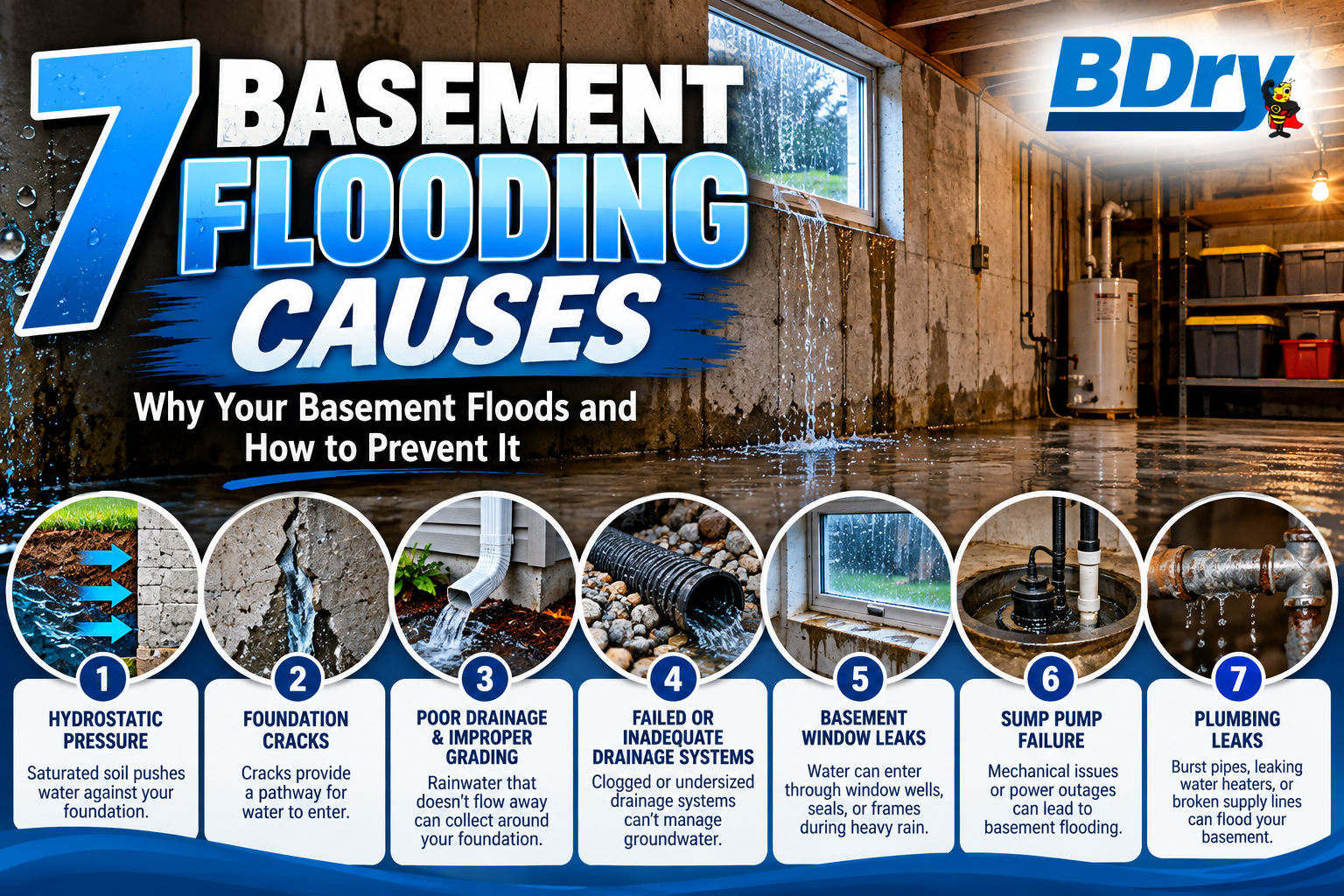
1. Hydrostatic Pressure Around Your Foundation
One of the most common basement flooding causes is hydrostatic pressure.
Hydrostatic pressure occurs when water accumulates in the soil surrounding your foundation and creates pressure against basement walls and floors. After prolonged or heavy rainfall, saturated soil can increase the pressure exerted by groundwater.
Your basement sits below ground level, meaning the foundation is constantly surrounded by soil. When that soil becomes saturated, groundwater can find its way into your basement through vulnerable areas.
These entry points may include:
-
Foundation wall cracks
-
Floor cracks
-
The joint where the basement wall meets the floor
-
Porous concrete or masonry
-
Gaps around foundation penetrations
-
Areas with inadequate drainage
Why Hydrostatic Pressure Can Cause Flooding
Imagine your basement foundation surrounded by waterlogged soil. As groundwater builds up, it pushes against the foundation. If water finds an opening, it can enter the basement.
The greater the groundwater accumulation, the more likely existing vulnerabilities are to become apparent.
According to the U.S. Geological Survey, groundwater moves through soil and underground materials, and its behavior depends on factors such as precipitation and local geology.
BDry’s waterproofing approach includes drainage solutions designed to capture groundwater and direct it away from vulnerable basement areas.
Learn more about our professional waterproofing services.
2. Foundation Cracks Allow Water to Enter
Basement flooding causes cracks in your home’s foundation.
Concrete foundations can develop cracks over time for several reasons, including settling, shrinkage, soil movement, and changing environmental conditions.
Not every crack means your foundation has a serious structural problem. However, cracks can provide an opening for water to enter when the surrounding soil becomes saturated.
Warning Signs of Water Entering Through Foundation Cracks
Homeowners should watch for:
-
Water trickling down basement walls
-
Damp spots around visible cracks
-
Water stains extending below cracks
-
White, powdery mineral deposits
-
Puddles appearing near a foundation wall
-
Cracks that become wet after heavy rainfall
Sometimes water enters through a crack so slowly that homeowners don’t immediately notice it. Over time, basement flooding causes damage to drywall, insulation, flooring, and stored belongings.
Why Simply Sealing the Crack May Not Be Enough
Applying a waterproof coating or sealant might help with certain localized problems, but it doesn’t necessarily address the groundwater surrounding your foundation.
If water pressure remains high, moisture may eventually find another entry point.
Professional waterproofing focuses on understanding where the water originates and how it should be managed.
For structural foundation problems, BDry recommends consulting its affiliated foundation repair specialist, Ram Jack of Kentucky. Structural stabilization and groundwater management are different services, and some properties may require both.
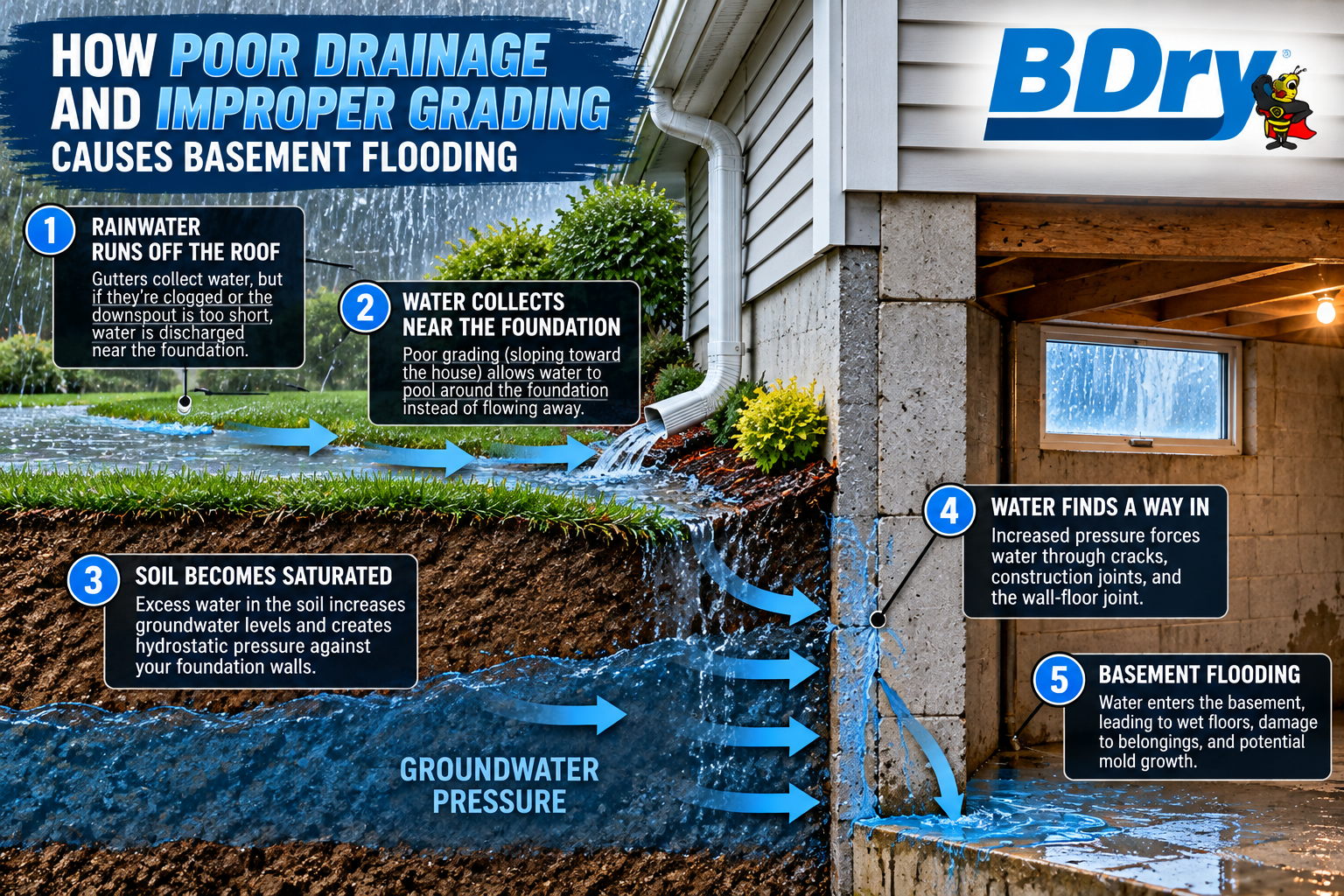
3. Poor Exterior Drainage and Improper Grading
Sometimes the biggest basement flooding causes actually begin outside your home.
Your gutters, downspouts, landscaping, and yard grading all play an important role in directing rainwater away from your foundation.
When these systems aren’t working properly, water can collect around your basement walls instead of flowing safely away from the house.
Common Exterior Drainage Problems
Basement flooding causes the increased likelihood of several drainage issues:
-
Clogged gutters: Leaves, dirt, and debris prevent rainwater from flowing properly.
-
Overflowing gutters: Water spills over the edges and collects near the foundation.
-
Short downspouts: Rainwater discharges too close to the house.
-
Improper grading: The ground slopes toward the foundation instead of away from it.
-
Low spots in the yard: Water pools near basement walls.
-
Poorly positioned landscaping: Certain landscaping features can direct runoff toward the home.
The Environmental Protection Agency (EPA) recommends maintaining gutters and ensuring that the ground slopes away from a home’s foundation to help prevent water intrusion.
How Basement Flooding Causes Drainage Issues
During heavy rainfall, a clogged gutter can release significant amounts of water directly beside the house.
As that water enters the soil, groundwater pressure can increase around the foundation.
Eventually, water may enter through cracks, mortar joints, or the area where the basement wall meets the floor.
How to Reduce the Risk
Homeowners can help improve exterior drainage by cleaning gutters regularly, extending downspouts, correcting grading problems, and addressing areas where water collects.
However, exterior drainage improvements may not completely resolve basement flooding if groundwater is already entering through vulnerable foundation areas.
In those situations, professional basement waterproofing may be necessary.
4. Failed or Inadequate Foundation Drainage Systems
Another frequently overlooked entry on the list of basement flooding causes is an aging or inadequate foundation drainage system.
Many homes have drainage systems installed during construction to help move groundwater away from the foundation.
These systems may include exterior footing drains, sometimes called French drains.
However, drainage systems can become less effective over time.
Why Foundation Drainage Systems Fail
Basement flooding causes:
-
Sediment buildup inside drainage pipes
-
Blockages that restrict water movement
-
Crushed or damaged drainage pipes
-
Improper installation
-
Insufficient drainage capacity
-
Changes in groundwater conditions
-
Poor discharge locations
When the original drainage system cannot handle the amount of groundwater surrounding your home, water may begin accumulating around the foundation.
Eventually, it can enter the basement through the path of least resistance.
Signs Your Foundation Drainage May Be Failing
You might notice water appearing along the basement perimeter, recurring leaks after storms, or water entering where the wall meets the floor.
These symptoms can indicate that groundwater isn’t being managed effectively.
BDry’s High-Capacity Drainage System
BDry uses a specialized High-Capacity Drain System designed to capture groundwater at common foundation entry points.
The system works with BDry’s wall system to direct moisture into drainage piping rather than allowing it to spread throughout the basement.
A professional inspection can help determine whether your existing drainage system is contributing to recurring basement flooding.
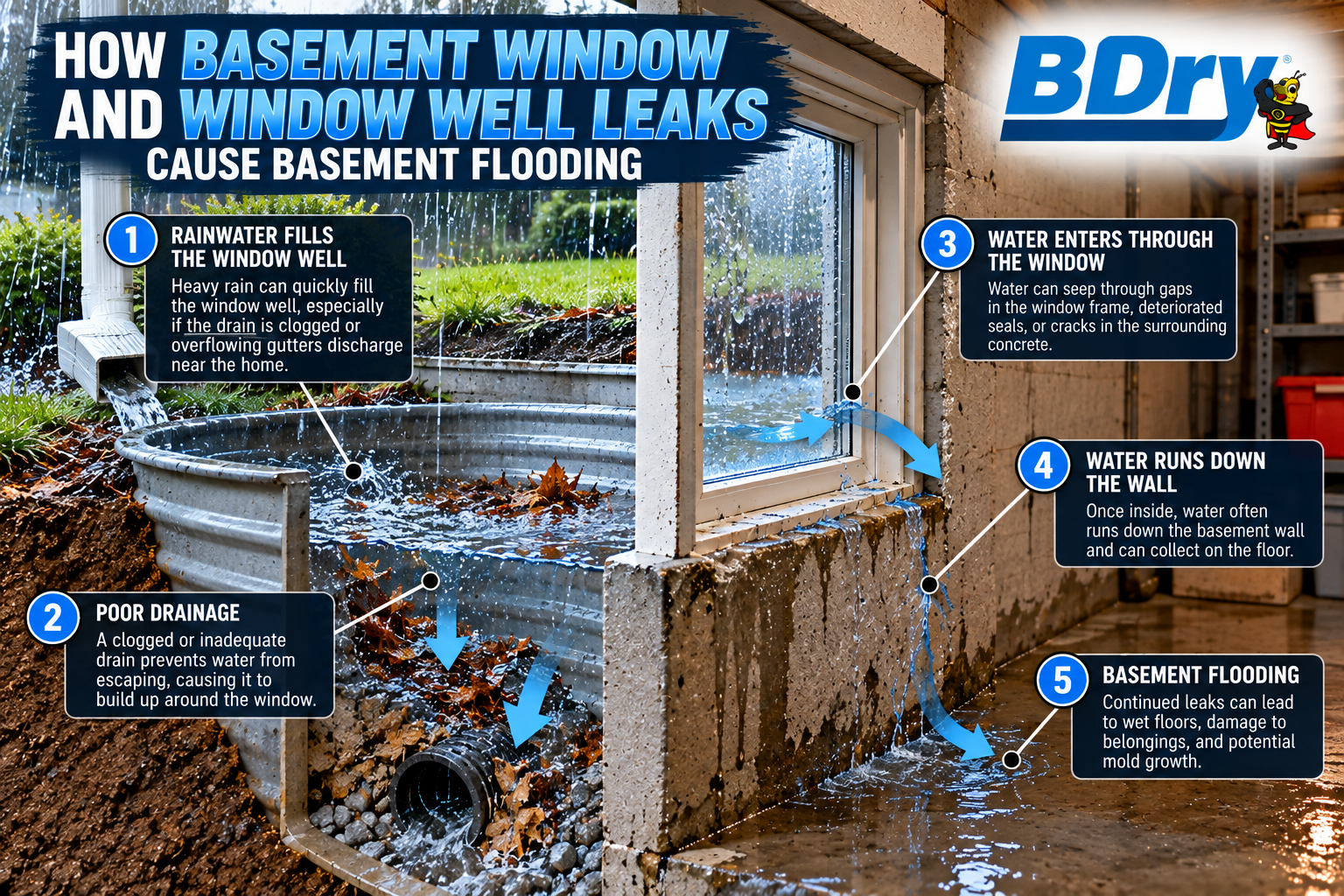
5. Basement Window and Window Well Leaks
Basement flooding causes can start with basement windows, particularly during heavy rainstorms.
Many basement windows sit partially or entirely below the surrounding ground level. Some are installed within window wells that allow light and ventilation into the basement.
While these features are useful, they can also become vulnerable to water intrusion.
How Basement Windows Cause Flooding
Basement flooding causes start when water can enter through basement windows when:
-
Window wells fill with rainwater
-
Drainage beneath the window well becomes blocked
-
Window seals deteriorate
-
Frames become damaged
-
Water accumulates against the glass
-
Gaps develop between the window frame and foundation
During a severe storm, a poorly draining window well can collect enough water to create pressure against the window.
If water enters around the frame, it may run down the basement wall and collect on the floor.
Warning Signs of Basement Window Leaks
Look for water stains beneath windows, damp window frames, peeling paint, and puddles that consistently appear below a basement window after rainfall.
Homeowners should also inspect window wells for leaves, dirt, and other debris that could interfere with drainage.
Proper window well drainage, functional seals, and appropriate covers may help reduce the risk of water intrusion.
However, if water is entering through nearby foundation cracks or other underground pathways, additional waterproofing measures may be required.
6. Sump Pump Failure or Power Outages
Sump pumps are designed to collect and remove water from basements when gravity drainage isn’t sufficient.
A sump pump typically sits inside a basin, where it activates when water reaches a predetermined level.
The pump then moves collected water through a discharge line to an appropriate location outside the home.
Unfortunately, sump pumps can fail.
Common Causes of Sump Pump Failure
Some of the most common basement flooding causes include:
-
Power outages during severe storms
-
Mechanical failure
-
Clogged discharge pipes
-
Stuck or malfunctioning float switches
-
Improper pump sizing
-
Frozen discharge lines
-
Poor maintenance
-
Aging equipment
One particularly frustrating scenario occurs when a storm brings heavy rainfall and knocks out electricity at the same time.
If your sump pump relies entirely on household power and doesn’t have an appropriate backup system, it may stop working when you need it most.
Signs Your Sump Pump May Not Be Working
Basement flooding causes unusual noises, excessive vibration, continuous operation, failure to activate, or water rising inside the sump basin.
If you suspect a malfunction, avoid handling electrical equipment while standing in water.
Professional Sump Pump Solutions
BDry evaluates whether a sump pump and basement flooding causes are necessary based on a property’s layout, terrain, and drainage conditions.
When gravity drainage isn’t practical, a professionally installed sump pump can help collect and discharge groundwater away from the foundation.
Regular maintenance and consideration of an appropriate backup system can help reduce the likelihood of pump-related flooding.
7. Plumbing Leaks and Broken Water Lines
Not all basement flooding causes involve rainwater or groundwater.
Sometimes water originates from inside the home.
Basements frequently contain important plumbing equipment, including water heaters, washing machines, supply lines, drainpipes, and other household systems.
When one of these components fails, water can spread across the basement floor.
Common Plumbing-Related Basement Flooding Causes
Potential problems include:
-
Burst water supply pipes
-
Leaking water heaters
-
Broken washing machine hoses
-
Damaged plumbing connections
-
Clogged or overflowing drains
-
Sewer backups
-
Leaking HVAC condensate lines
Unlike groundwater intrusion, plumbing-related flooding can occur during perfectly dry weather.
How to Identify a Plumbing-Related Flood
If water appears suddenly without rainfall, investigate nearby plumbing fixtures and equipment from a safe location.
Other warning signs may include unusual water pressure, a continuously running water meter, dripping pipes, or water accumulating around appliances.
What Should You Do?
If a supply line is leaking and you can safely access the shutoff valve, turning off the water supply may help limit additional damage.
Contact a qualified plumber for plumbing failures. Sewer backups require particular care because the water may contain harmful contaminants.
It’s important to remember that basement waterproofing and plumbing repairs solve different problems.
BDry specializes in basement and crawlspace waterproofing. If flooding originates from a broken plumbing fixture, that plumbing issue should be repaired before evaluating any remaining moisture problems.
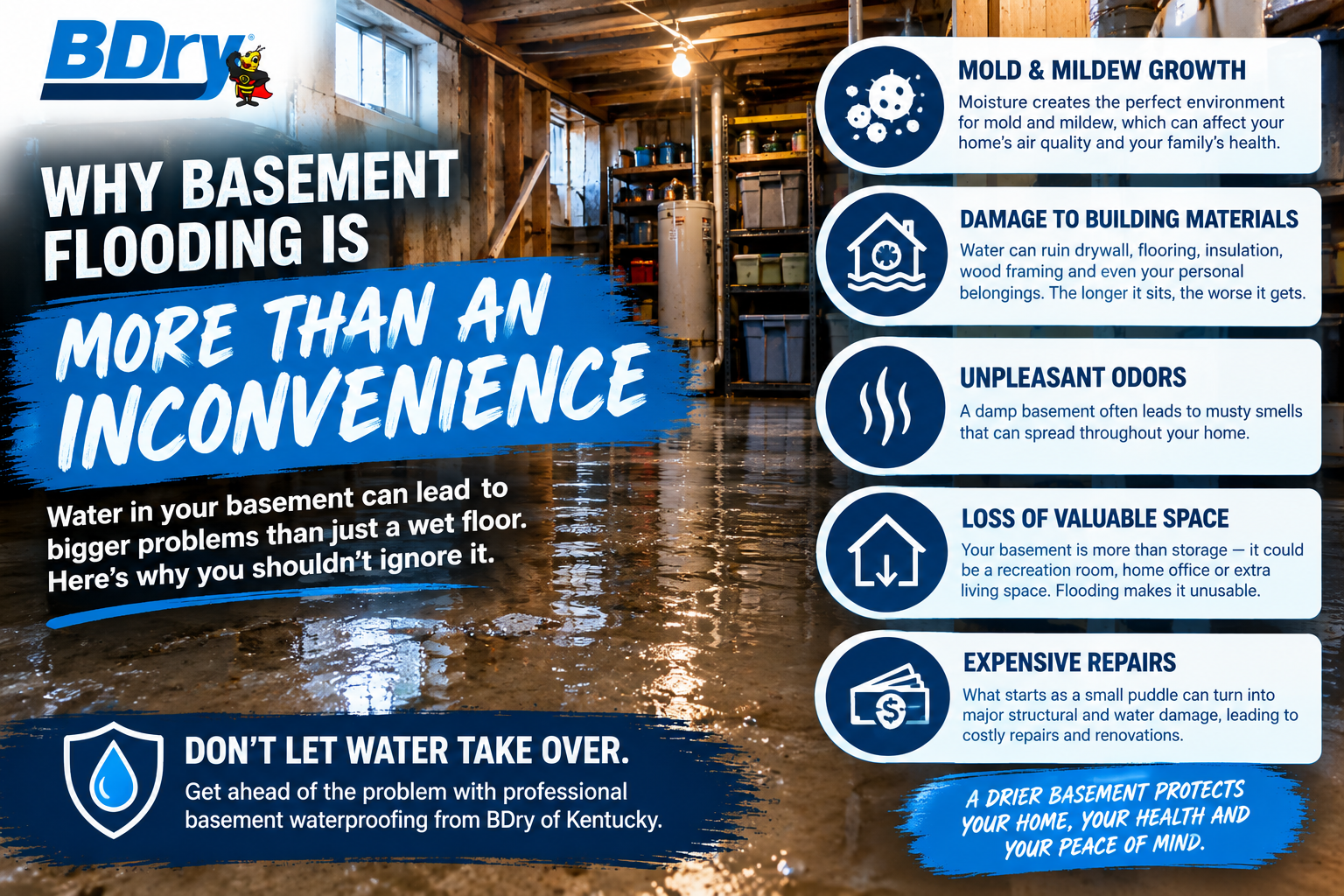
Why Basement Flooding Is More Than an Inconvenience
Understanding basement flooding causes is important because recurring water intrusion can affect much more than your basement floor.
Even a relatively small amount of water can create problems when moisture remains trapped inside building materials.
Mold and Mildew Growth
Wet basements can provide favorable conditions for mold growth.
The EPA’s Guide to Mold, Moisture, and Your Home explains that controlling moisture is essential for preventing mold problems.
Mold can grow on damp drywall, wood, carpeting, insulation, and other materials.
Damage to Building Materials
Water can damage drywall, flooring, wooden framing, insulation, furniture, and stored belongings.
Repeated moisture exposure can also contribute to wood deterioration and other material damage.
Unpleasant Odors
A persistently damp basement may develop musty odors that can spread into other parts of the home.
These odors often indicate that moisture conditions need further investigation.
Loss of Valuable Space
Basements provide important storage space and may also serve as recreation rooms, offices, or additional living areas.
Recurring flooding makes these spaces difficult to use confidently.
Expensive Repairs
The longer water problems continue, the greater the potential for damage to flooring, walls, insulation, and personal property.
Addressing basement flooding causes early can help homeowners avoid additional water-related repairs.
What Should You Do If Your Basement Floods?
If you discover standing water in your basement, your first priority should be safety.
FEMA’s flood safety guidance warns against touching electrical equipment while standing in water and advises homeowners to avoid potentially contaminated floodwater.
Once the area is safe, take the following steps:
-
Identify the source of the water. Determine whether the flooding is associated with rainfall, groundwater, a plumbing failure, or a malfunctioning sump pump.
-
Document the damage. Take photographs and videos for your records and any potential insurance claim.
-
Stop additional water when possible. If a plumbing failure is responsible, shut off the water supply from a safe location.
-
Arrange appropriate water removal. Significant flooding may require professional water extraction and restoration.
-
Dry affected materials promptly. The EPA recommends drying wet materials within 24–48 hours to help prevent mold growth.
-
Address the underlying basement flooding causes. Once the immediate water damage is handled, investigate why the flooding occurred and what measures could prevent it from happening again.
Remember, removing standing water is only part of the solution. If groundwater continues entering your basement, the problem may return during the next significant rainstorm.
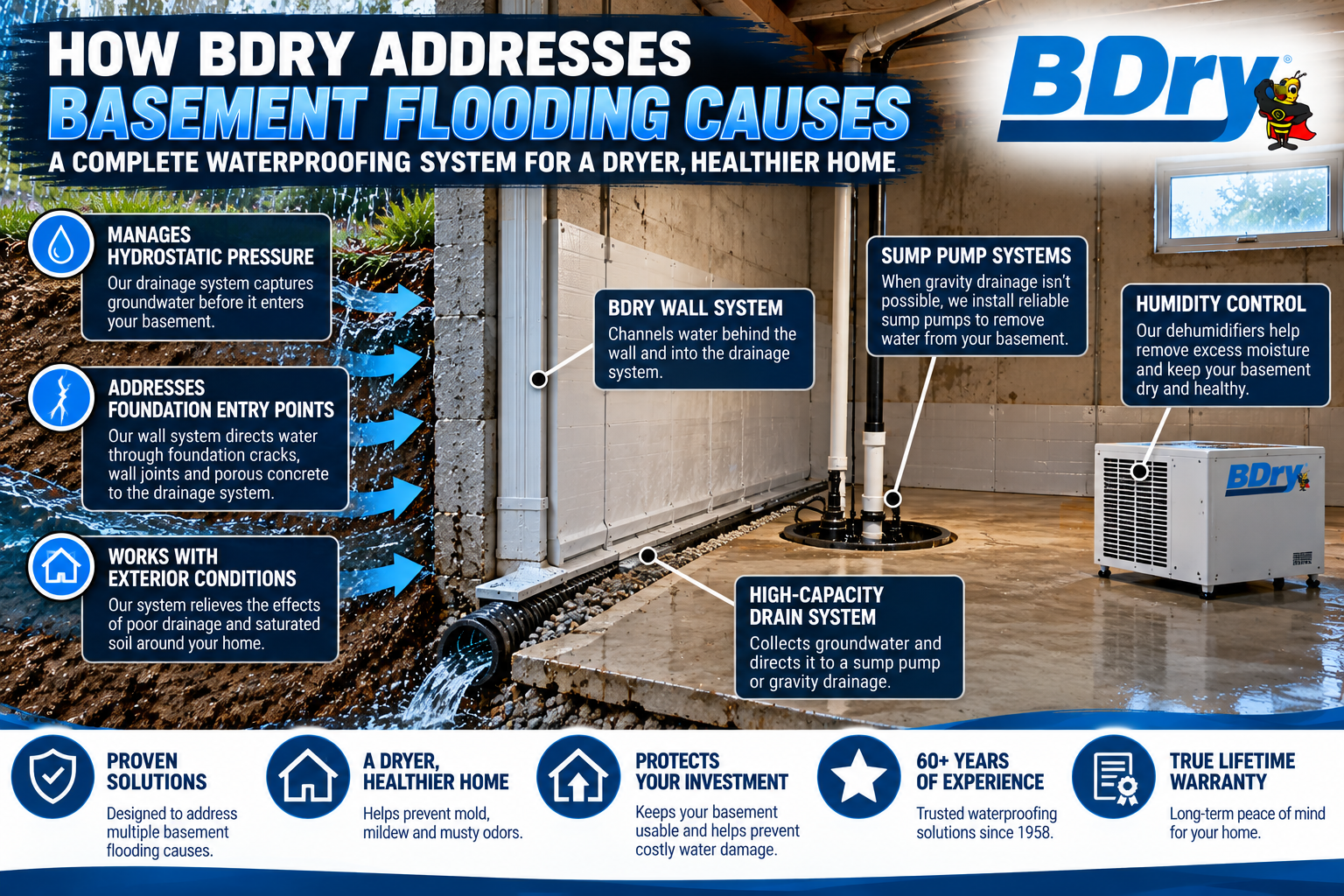
How BDry Helps Address Basement Flooding Causes
At BDry of Kentucky, we believe effective waterproofing begins with understanding how water enters your home.
Different basement flooding causes require different solutions, which is why a professional inspection is so important.
Professional Basement Waterproofing
BDry’s basement waterproofing system is designed to manage multiple common groundwater entry points.
Its High-Capacity Drain System collects water around vulnerable foundation areas, while the wall system directs seepage toward the drainage piping.
Sump Pump Systems
When gravity drainage isn’t possible, BDry can recommend a sump pump system to collect and discharge groundwater away from the foundation.
Crawlspace Waterproofing
Moisture problems aren’t limited to basements.
BDry also provides crawlspace waterproofing solutions for homeowners dealing with standing water, damp soil, and recurring moisture problems beneath their homes.
Humidity Control
Even after active water intrusion is addressed, excessive humidity can remain a concern.
BDry offers commercial-grade dehumidifiers to help manage moisture in basements and crawlspaces.
Protect Your Home by Addressing Basement Flooding Causes Today
Understanding the most common basement flooding causes is the first step toward keeping your basement dry and protecting your home.
Whether your flooding is caused by hydrostatic pressure, foundation cracks, poor exterior drainage, failing drainage systems, basement window leaks, sump pump failure, or plumbing problems, identifying the source is essential.
Some problems can be addressed through routine home maintenance or plumbing repairs. Others require a professional waterproofing system designed to manage groundwater around your foundation.
Don’t wait until the next Kentucky rainstorm to discover that your basement water problem is getting worse.
BDry of Kentucky provides professional basement and crawlspace waterproofing throughout Central, Southern, and Eastern Kentucky. Our team can evaluate your basement flooding causes and recommend an appropriate waterproofing solution.
Contact BDry today for a free waterproofing inspection and estimate.