

Are you asking “why is my crawl space wet?” Read more about common causes, and how BDry can help!
You probably don’t spend much time thinking about the area underneath your home. But when you notice standing water, damp wood, condensation, musty odors, or mold beneath your house, one question quickly becomes important: “Why is my crawl space wet?”
A wet crawl space isn’t something homeowners should simply accept as normal. Moisture can enter a crawl space in several different ways, from rainwater collecting around the foundation to groundwater, plumbing leaks, humid air, and moisture evaporating directly from exposed soil.
Once moisture gets underneath your home, the problem may not remain confined to the crawl space. The Environmental Protection Agency (EPA) explains that moisture accumulating in crawl spaces can move into other areas of a building through openings and contribute to mold growth.
Fortunately, understanding “why is my crawl space wet” is the first step toward finding the right solution.
BDry of Kentucky provides professional crawl space waterproofing and moisture-control solutions throughout Central, Southern, and Eastern Kentucky. Rather than treating every wet crawl space exactly the same, BDry evaluates the individual property and develops a customized solution based on how moisture is getting inside.
Here are five of the most common reasons you may be asking, “Why is my crawl space wet?”
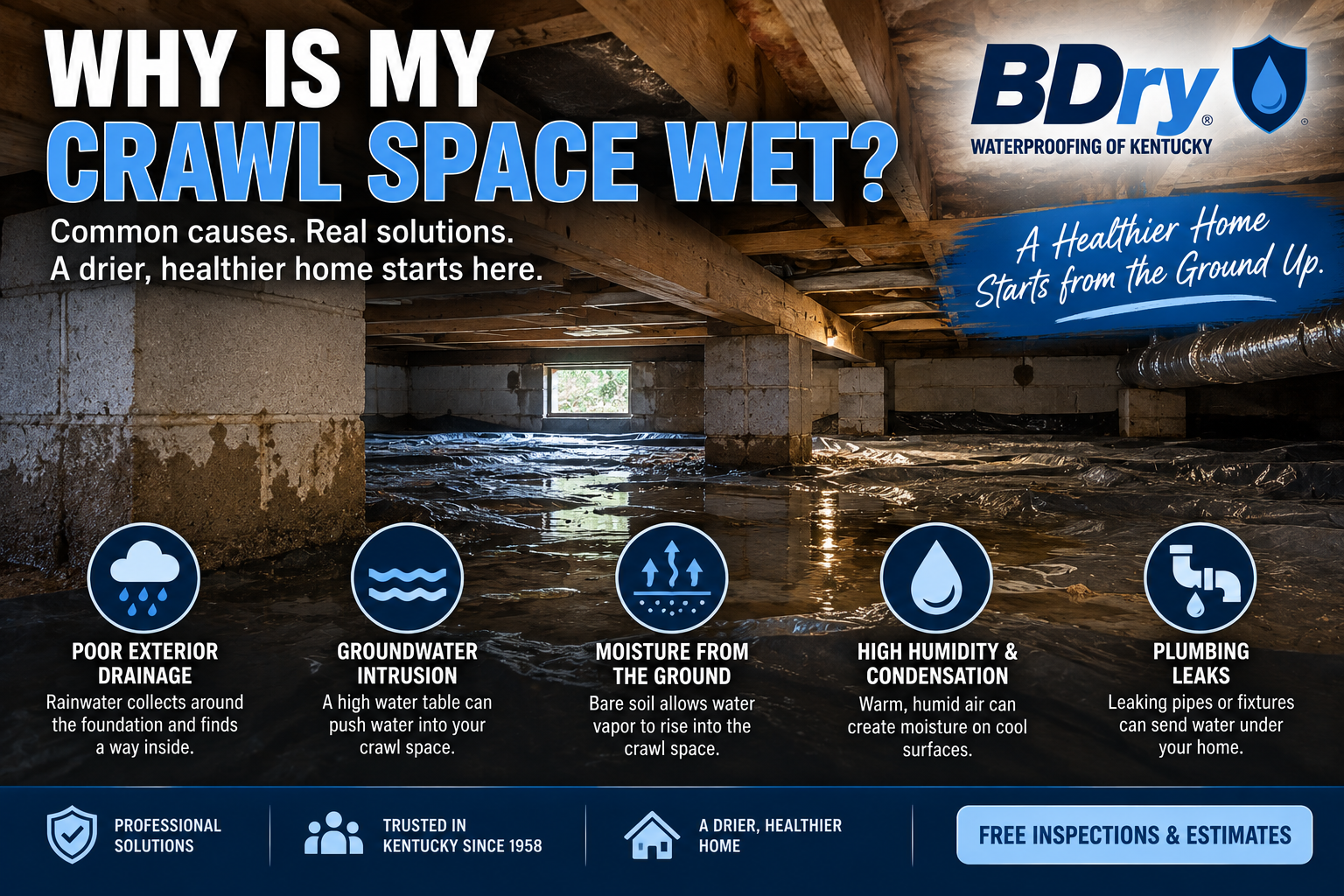
1. Rainwater Is Collecting Around Your Foundation
One of the first things to investigate when asking “why is my crawl space wet” is what happens outside the house when it rains.
Rainwater should be directed away from your foundation. When it isn’t, water can accumulate in the soil immediately surrounding the house and eventually find its way into the crawl space.
Poor exterior drainage can result from:
- Clogged or overflowing gutters
- Downspouts discharging too close to the foundation
- Low spots around the house
- Soil that slopes toward rather than away from the foundation
- Poorly designed landscaping
- Inadequate foundation drainage
The U.S. Department of Energy recommends making sure the ground slopes away from the foundation and keeping gutters maintained to help prevent water from collecting around a building.
Watch your property during a heavy rainstorm. If water pools against the house instead of flowing away, that exterior drainage problem could be contributing to the moisture underneath your home.
Improving gutters, downspouts, grading, and exterior drainage can reduce the amount of water reaching the foundation. However, if groundwater is already entering the crawl space, exterior improvements alone may not completely solve the problem.
That’s where a professional inspection becomes valuable.
2. Groundwater Is Entering the Crawl Space
If you’re wondering, “Why is my crawl space wet after heavy rain?”, groundwater may be part of the answer.
As rainwater enters the soil, groundwater conditions around the foundation can change. When the soil becomes saturated or the water table rises, water may find pathways into the crawl space through vulnerable areas around or underneath the foundation.
The EPA specifically notes that in areas with a high water table and suitable weather conditions, groundwater can enter a crawl space.
Signs that groundwater could be contributing to the problem include:
- Standing water following prolonged rain
- Puddles appearing in the same areas
- Wet foundation walls
- Water entering around the crawl space perimeter
- Damp soil that remains wet long after rainfall
- Water stains on foundation materials
BDry’s waterproofing system is designed to address common pathways through which groundwater enters basements and crawl spaces. The company’s high-capacity drainage system manages groundwater entering around the foundation, while its wall system can direct moisture into the drainage system.
Depending on the property’s layout and drainage conditions, a sump pump may also be necessary to collect water and discharge it away from the foundation. BDry determines whether one is appropriate as part of its inspection process.
The objective isn’t simply to dry today’s puddle. It’s to determine “why is my crawl space wet” and how it can be managed when the next storm arrives.
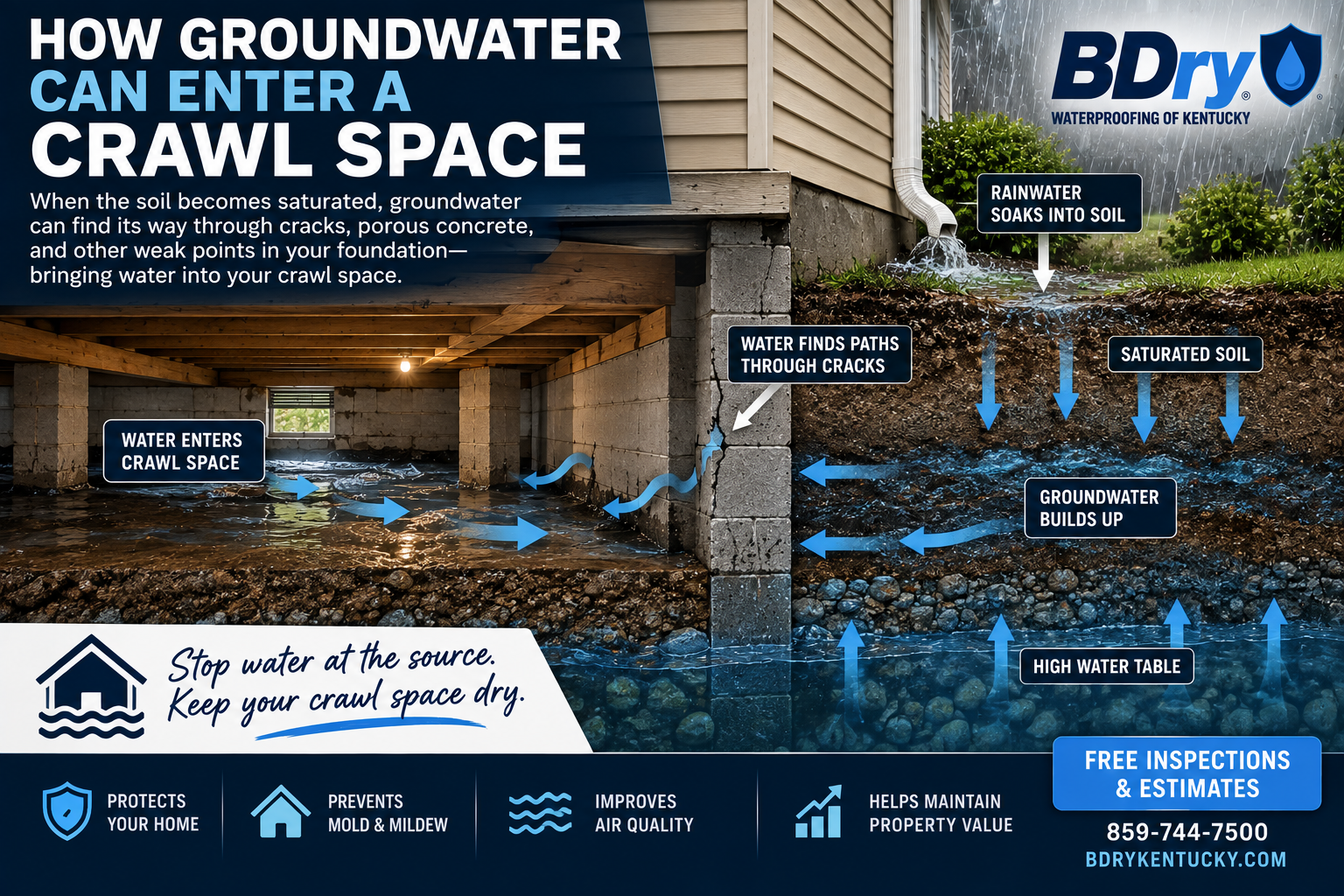
3. Moisture Is Coming From the Ground Beneath Your Crawl Space
Here’s a cause homeowners frequently overlook when asking “why is my crawl space wet”.
Your crawl space doesn’t necessarily need to have visible flooding to have a serious moisture problem.
If your crawl space has a bare dirt floor, moisture from the soil can migrate upward and enter the crawl space as water vapor.
The U.S. Department of Energy’s Building Science Education resources similarly explain that moisture can migrate through the soil beneath a crawl space and enter as either liquid water or water vapor. That moisture can then condense on cooler materials such as floor joists.
This means answering “why is my crawl space wet” can be dampness even when you don’t see a puddle anywhere.
Signs of ground moisture may include:
- Damp exposed soil
- High crawl-space humidity
- Condensation on wood, pipes, or ductwork
- Musty odors
- Mold or mildew
- Damp insulation
- Moisture on floor joists
A properly installed ground vapor barrier or encapsulation system can help separate the crawl space from the moisture in the soil below. The Department of Energy recommends a continuous ground cover sealed around walls, piers, seams, and penetrations as part of controlling crawl-space ground moisture.
BDry provides customized crawl space waterproofing solutions designed to control moisture beneath the home.
4. High Humidity and Condensation Are Making the Crawl Space Wet
Sometimes the answer to “why is my crawl space wet?” isn’t groundwater at all.
It may be humidity.
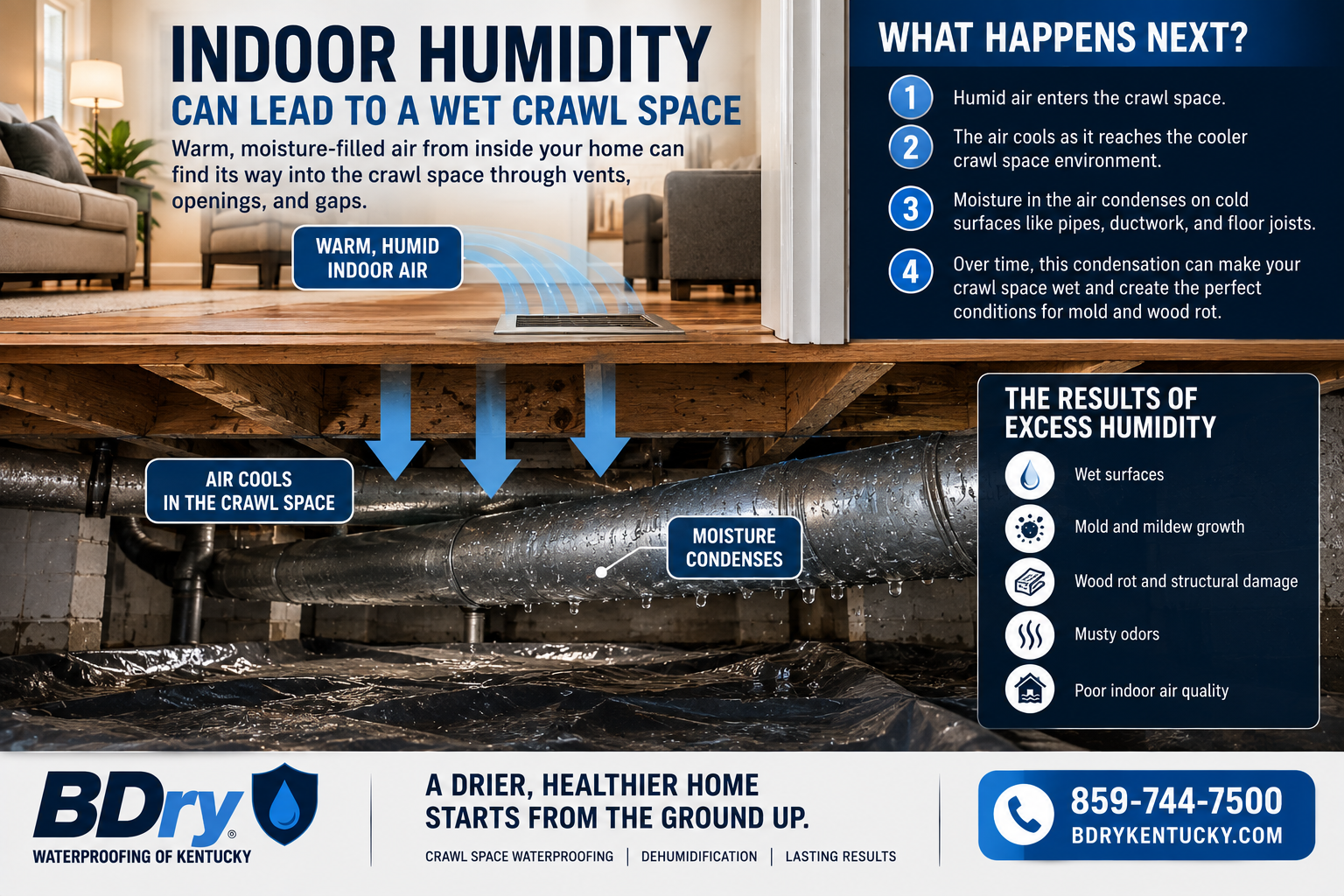
Warm, moisture-filled air entering a cooler crawl space can reach surfaces that are cold enough for condensation to form. Water droplets may appear on:
- HVAC ducts
- Plumbing pipes
- Floor joists
- Foundation walls
- Insulation
- Other cool surfaces
Think about a cold glass of water sitting outside on a humid Kentucky afternoon. Water hasn’t leaked through the glass—the moisture in the surrounding air has condensed on its cold surface.
A similar process can happen beneath your house.
Carrier Global recommends keeping indoor relative humidity below 60% and ideally between 30% and 50% when possible to help discourage mold growth.
High crawl-space humidity can be especially troublesome because the moisture may be widespread rather than concentrated in one obvious leaking location.
You might notice:
- Sweating ductwork
- Condensation on pipes
- Damp wood
- Rust or corrosion
- Musty odors
- Mold or mildew
- Sagging or damp insulation
- A generally clammy feeling beneath the house
BDry offers commercial-grade dehumidifiers for crawl spaces and basements where controlling excessive humidity is part of the appropriate solution.
However, a dehumidifier isn’t a substitute for fixing active water intrusion when asking “why is my crawl space wet”. If groundwater is entering the crawl space, the water source should also be addressed.
5. You May Have a Plumbing or Household Water Leak
Not all crawl-space water comes from Mother Nature.
Sometimes it’s coming from inside the house.
Plumbing pipes frequently run through crawl spaces, which means a leaking supply line, drain, or plumbing fixture can send water underneath your home.
Possible sources include:
- Leaking water-supply lines
- Damaged drainpipes
- Plumbing connections
- Water heaters
- HVAC condensate lines
- Bathroom plumbing
- Kitchen plumbing
- Washing machine lines or drains
This type of moisture problem can be particularly confusing because it may occur regardless of the weather.
If you’re asking “why is my crawl space wet” during a long period without rain, a plumbing or mechanical source deserves investigation.
A plumbing leak generally needs to be repaired by an appropriate plumbing professional. But if the crawl space also has groundwater, humidity, or drainage problems, those conditions may need separate solutions.
Why Asking “Why Is My Crawl Space Wet” Shouldn’t Be Ignored
Because crawl spaces are largely out of sight, it’s tempting to think a little moisture underneath the house doesn’t matter.
Unfortunately, water doesn’t care whether you regularly visit that part of your home.
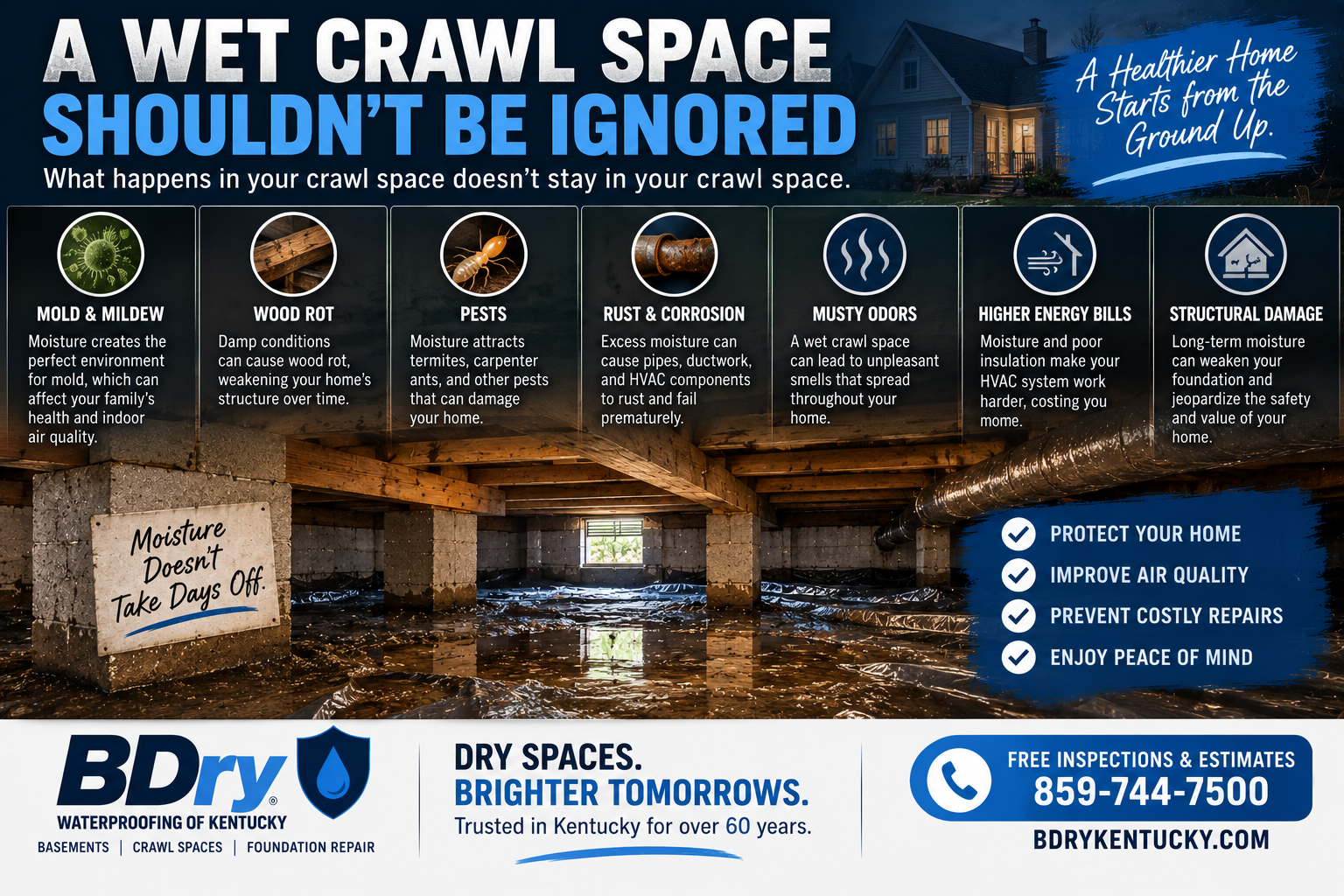
BDry warns that crawl-space standing water and excess moisture can contribute to problems including mold and mildew, wood rot, structural deterioration, and indoor-air-quality concerns.
Mold and Mildew
Mold needs moisture to grow.
According to the EPA’s mold guidance, controlling moisture is fundamental to controlling indoor mold. The EPA recommends fixing the underlying water problem when mold is present and drying water-damaged areas promptly.
Wood Rot and Material Damage
Floor joists, subflooring, beams, and other wood components can be exposed to prolonged dampness in a wet crawl space.
The EPA notes that mold gradually damages materials on which it grows and that long-term moisture and mold problems can eventually contribute to structural damage.
Moisture Can Affect More Than the Crawl Space
Your crawl space isn’t completely isolated from the rest of the building.
EPA guidance explains that crawl-space moisture can migrate into other parts of a building through cracks and openings in walls, floors, and ceilings.
That makes crawl-space moisture a whole-home concern, not merely an unpleasant problem underneath the floor.
How Do You Know “Why Is My Crawl Space Wet?”
Different sources of moisture can produce similar symptoms.
Standing water after rain could suggest groundwater or exterior drainage problems. Water appearing regardless of weather could point toward plumbing. Widespread droplets on pipes and ducts may suggest condensation. Damp exposed soil with no obvious leak may indicate ground moisture and evaporation.
Sometimes a crawl space has more than one problem at the same time.
For example, a home could have poor exterior drainage that allows groundwater intrusion and an exposed dirt floor contributing water vapor to the crawl-space air.
That’s why diagnosing the moisture source should come before choosing the solution.
How Professional Crawl Space Waterproofing Can Help You Answer “Why Is My Crawl Space Wet?”
BDry provides crawl-space waterproofing throughout Central, Southern, and Eastern Kentucky. The company evaluates the home’s individual conditions and designs a customized system rather than assuming every property requires exactly the same equipment.
Depending on what’s causing the moisture, a crawl-space solution may involve:
- Professional drainage
- Groundwater management
- Crawl-space waterproofing
- Moisture barriers
- Sump pump systems when necessary
- Commercial-grade dehumidification
- Other customized moisture-control measures
The goal is to manage the source of the moisture and answer the question “why is my crawl space wet”, not simply dry the crawl space and hope it stays that way.
BDry has been in business for more than 60 years and says its waterproofing professionals are trained, licensed, and insured. The company also uses patented waterproofing products and offers long-term warranty protection for qualifying installations under its warranty terms.
Stop Asking “Why Is My Crawl Space Wet?” and Find the Source
If you’ve been wondering “why is my crawl space wet?”, don’t wait until standing water, mold, musty odors, or damaged materials make the problem impossible to overlook.
Your wet crawl space may be caused by poor exterior drainage, groundwater intrusion, moisture evaporating from exposed soil, excessive humidity and condensation, or a plumbing leak. Identifying which problem—or combination of problems—is affecting your home is the key to finding an effective solution.
BDry of Kentucky offers free basement and crawl-space waterproofing estimates and allows homeowners to provide information and photos of their moisture problems when requesting an evaluation.
Don’t let the area underneath your home remain out of sight and out of mind. Contact BDry today to find out “why is my crawl space wet” and learn what can be done to keep it drier, healthier, and better protected.